Skip to Navigation

Getting a customer to buy from you once is tough enough. Getting them to come back for another purchase can be even tougher, especially when they have plenty of other brands competing for their attention.
A discount might bring someone back once, but it won’t really give them a reason to keep choosing your brand. You need to stay ‘top of mind’ after the purchase and reach customers when there’s a genuine reason to return.
That’s where ecommerce email campaigns can help.
You can use purchase history, customer preferences, and buying patterns to send emails that make the next purchase easier to consider.
In this article, we’ll look at 8 ecommerce email campaign ideas that can help one-time purchases become repeat business.
8 ecommerce email campaign ideas that drive repeat purchases
Here are 8 ecommerce email campaign ideas designed to encourage repeat purchases and keep customers engaged after checkout.
1. Welcome series for new customers
A welcome series is often the first conversation you have with a customer after they subscribe or place an order. In fact, according to Invesp, welcome emails have a 4x open rate and 5x more clicks.
So, use it to introduce your brand, explain what sets your products apart, and let customers know what to expect in future emails. You can also include a limited-time offer to encourage a second purchase while your brand is still fresh in their minds.
Let’s say you start a print-on-demand business with platforms like Printful & Printify. A welcome series is a great place to answer the questions new customers are most likely to have. Explain how your products are designed, where they’re produced, what your fulfillment and shipping timelines look like, and how quality is maintained.
You can also feature your best-selling products, share customer reviews, and set clear expectations for delivery. Address these details early to:
- Build trust
- Reduce purchase hesitation
- Give customers more confidence when they’re ready to place their next order
A simple three-email sequence often works well. The first email introduces your brand; the second highlights your most popular products or customer favorites; and the third can include a personalized recommendation or an incentive to encourage another purchase.
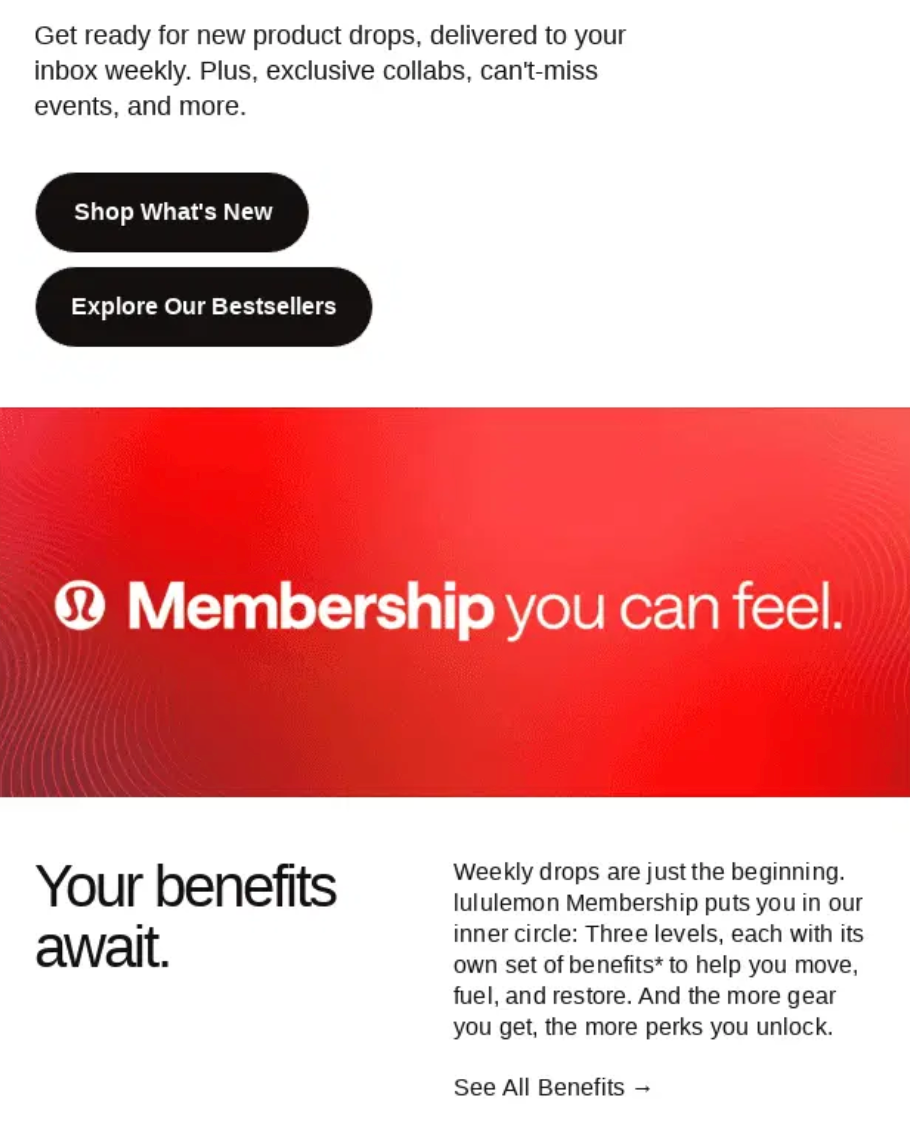
Take a cue from Lululemon’s introductory email, which covers important details and links for new subscribers to peruse.
2. Post-purchase follow-up emails
A post-purchase email reassures customers that they made the right choice while giving them a reason to engage with your brand again. Start with a genuine thank-you message, confirm what happens next, and answer common questions before customers have to ask them. This could include links to your FAQ, delivery live tracking, return policy, or customer support.
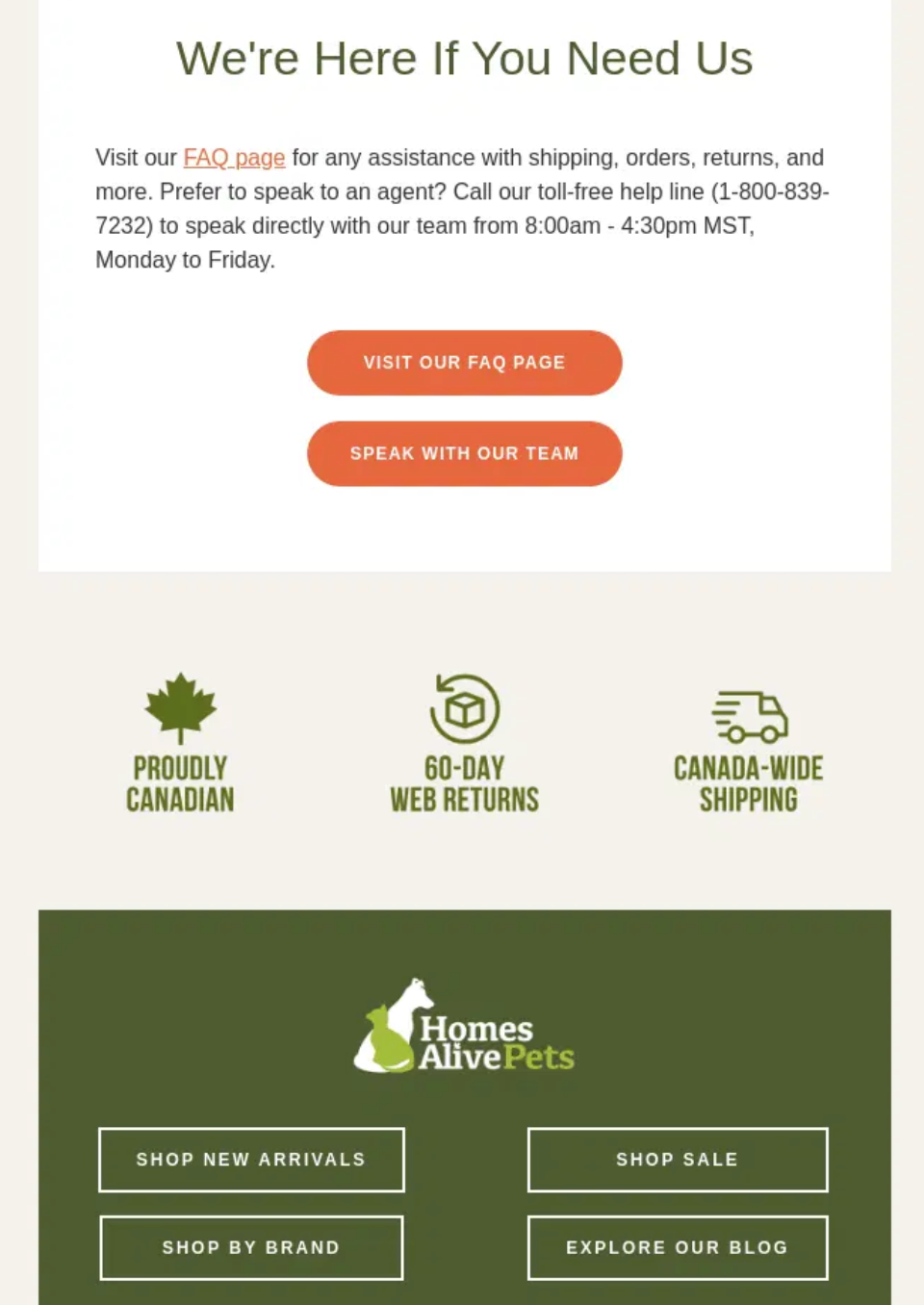
Homes Alive Pets does this well. They thank the customer, briefly reinforce the company’s values by mentioning they’re a family-owned Canadian business, then point shoppers toward support resources with clear calls to action.
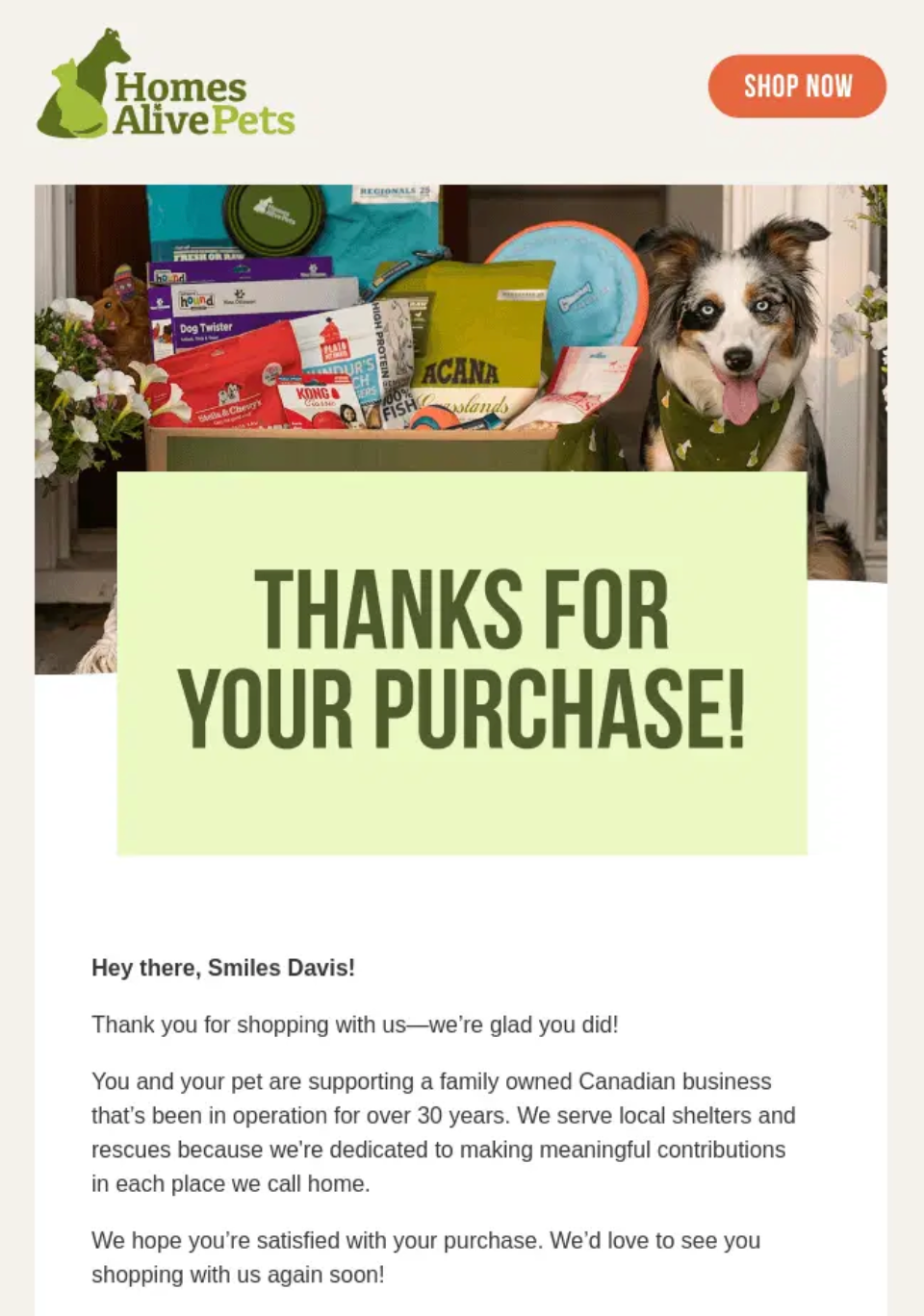
They also remind customers of benefits like 60-day returns and nationwide shipping, helping reduce any uncertainty after purchase. Instead of ending the email there, they feature links to new arrivals, current sales, and their blog. These additions keep customers engaged without making the email feel like a sales pitch, and help them find the information they need without having to work for it.
A follow-up email is also a good place to share product care instructions or practical usage tips. Once customers know how to get more value from their purchase, recommend products that naturally complement what they already bought. Clear visual instructions can make these emails even more useful.
For example, you can use an infographic to present product care steps, setup instructions, or maintenance tips in a format that’s easier for customers to scan and understand. Relevant suggestions are way more helpful than promotional content and can help you establish a long-term relationship with subscribers and buyers.
3. Product replenishment reminders
Replenishment emails work best when they arrive just before customers may run out of a product. So, instead of sending the same reminder to everyone, use purchase history and expected usage timelines to estimate when it’s time to reorder. A well-timed email is useful to the customer and often converts better than a generic promotional campaign.
Keep these emails focused on convenience rather than urgency:
- Estimate replenishment timing based on previous orders
- Personalize reminders for different products or buying habits
- Make reordering as easy as possible with a single click
- Offer subscriptions or recurring deliveries where relevant
Another way to go about is to alert customers when your product is almost sold out. It’ll help your products fly off the rack before you eventually replenish them. It can also help you gauge demand for a certain product. For example, Alma Coffee’s email below reminds customers that their popular roast is almost sold out.
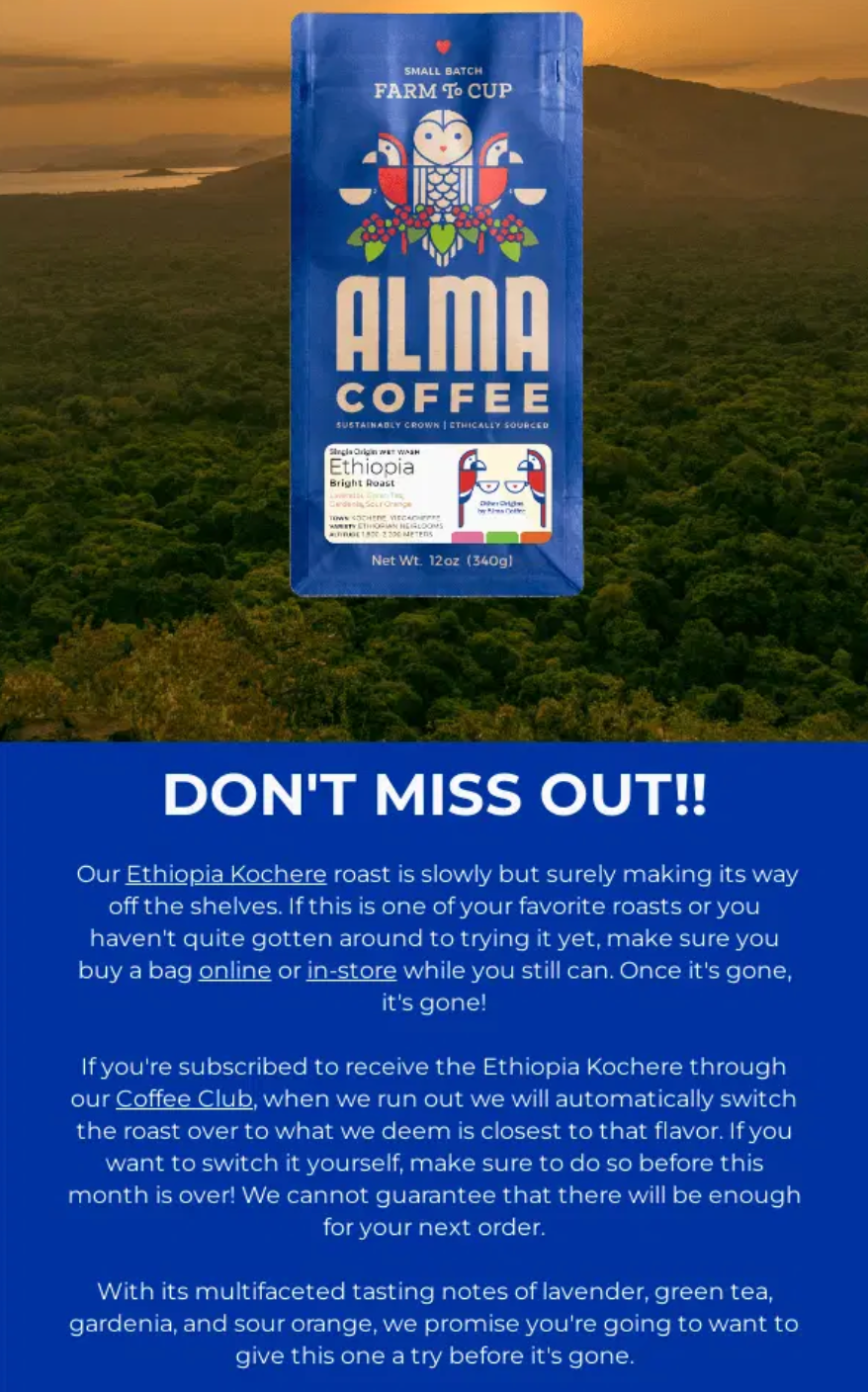
The email explains that the Ethiopia Kochere roast is leaving their lineup and sets expectations for their Coffee Club subscribers.
While this is technically a low-stock campaign rather than a replenishment reminder, it creates a similar effect by encouraging customers to reorder before their preferred product is no longer available.
4. Personalized product recommendation emails
Personalized emails increase open rates by 26%, according to Forbes. This is because the emails become all the more relevant to the individual subscriber. Since customers see products that match their interests or previous behavior, they’re likelier to engage and consider another purchase.
Conversion-oriented emails use customer data to suggest products that feel relevant, whether that’s based on previous purchases, browsing history, wishlist activity, or stated preferences. It makes clicking through and purchasing a no-brainer activity for subscribers.
Segmentation plays a big role here.
Someone buying baby products shouldn’t receive the same recommendations as a customer shopping for fitness equipment and vice versa. Even within the same category, recommendations can change based on purchase frequency, average order value (AOV), or products viewed but never purchased. Hook them in by personalizing your subject line, too.
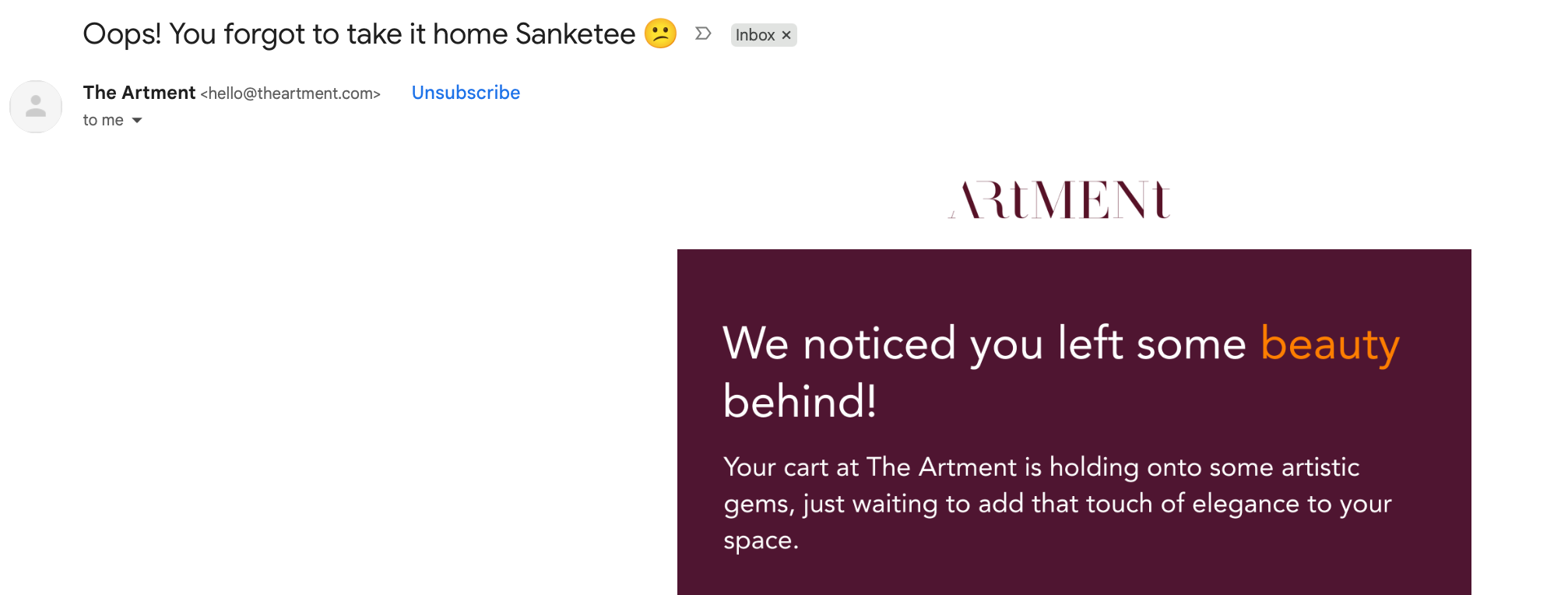
The more relevant the email, the more useful it feels.
You can also ask customers what they’re looking for instead of relying entirely on behavioral data. Preference centers, quizzes, and onboarding surveys give subscribers a simple way to share their interests, helping you send recommendations that better match their needs and ideal client profile.
Harry’s takes this approach with an interactive email that begins with a simple skincare quiz.
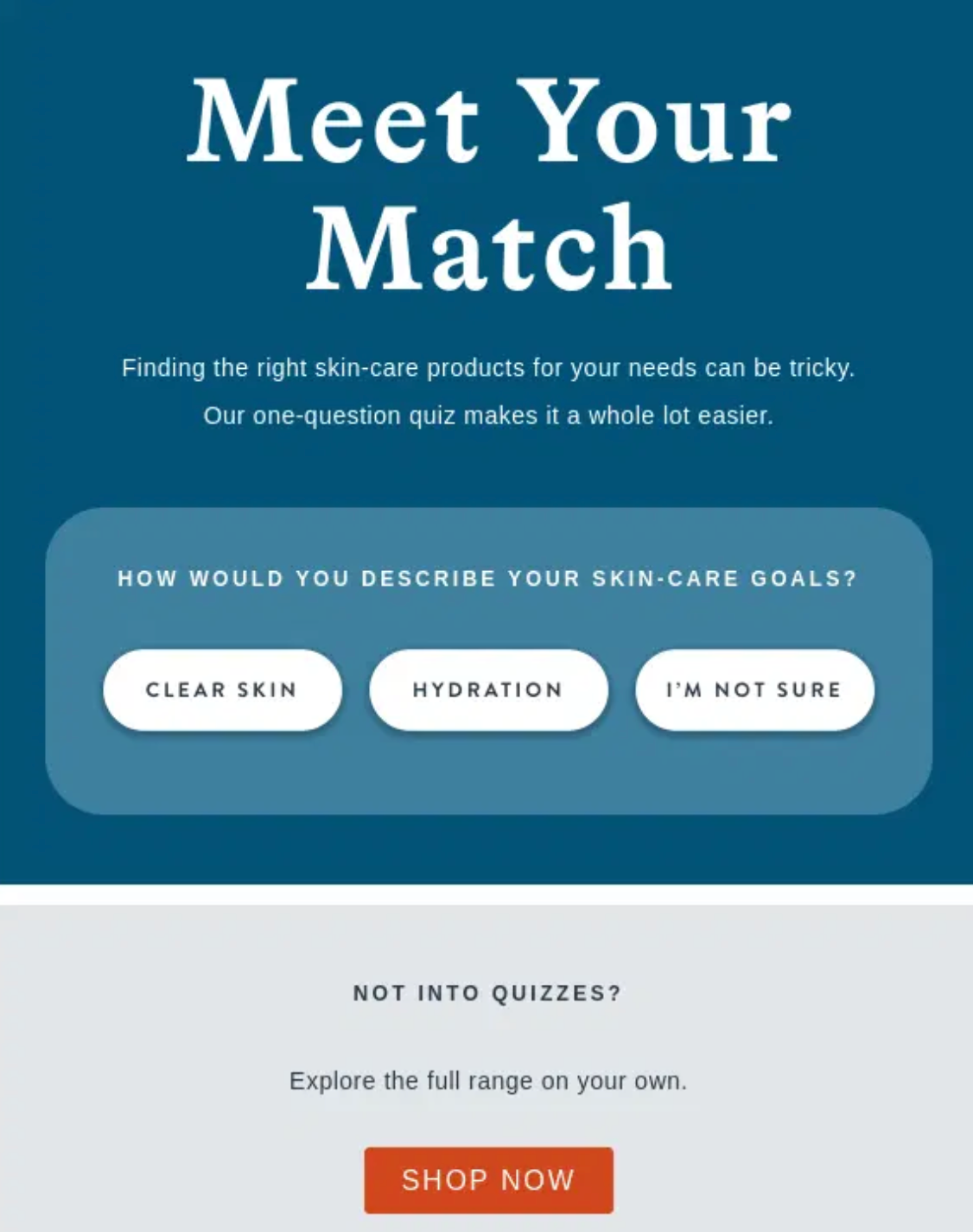
Instead of immediately promoting products, they ask subscribers about their skincare goals, then guide them toward products that fit those needs. For customers who don’t want to take the quiz, the email also includes an option to browse the full collection. It’s a thoughtful way to personalize recommendations while still giving subscribers control over how they shop.
5. Loyalty rewards and VIP campaigns
Did you know that having a loyalty program boosts your revenue by 15%-25% annually, according to McKinsey’s research?
Loyalty emails give customers a reason to come back since you’re rewarding them for shopping with your brand. Instead of relying on discounts for every campaign, use exclusive benefits that make customers feel valued and encourage repeat purchases. Some brands go a step further and use this campaign type as the entry point to turn customers into affiliates, rewarding them for referrals on top of their usual perks.
Some brands go a step further and use this campaign type as the entry point to turn customers into affiliates, rewarding them for referrals on top of their usual perks.
Effective loyalty emails often include:
- Available points and how close customers are to their next reward
- Members-only discounts or exclusive pricing
- Early access to new products or seasonal collections
- Reward expiration reminders that encourage customers to redeem benefits before they disappear
IKEA’s email is a good example of a members-only campaign. Rather than promoting a storewide sale, it highlights the benefits of ‘IKEA Family’ pricing and reminds customers to log in or scan their membership card to access exclusive discounts.
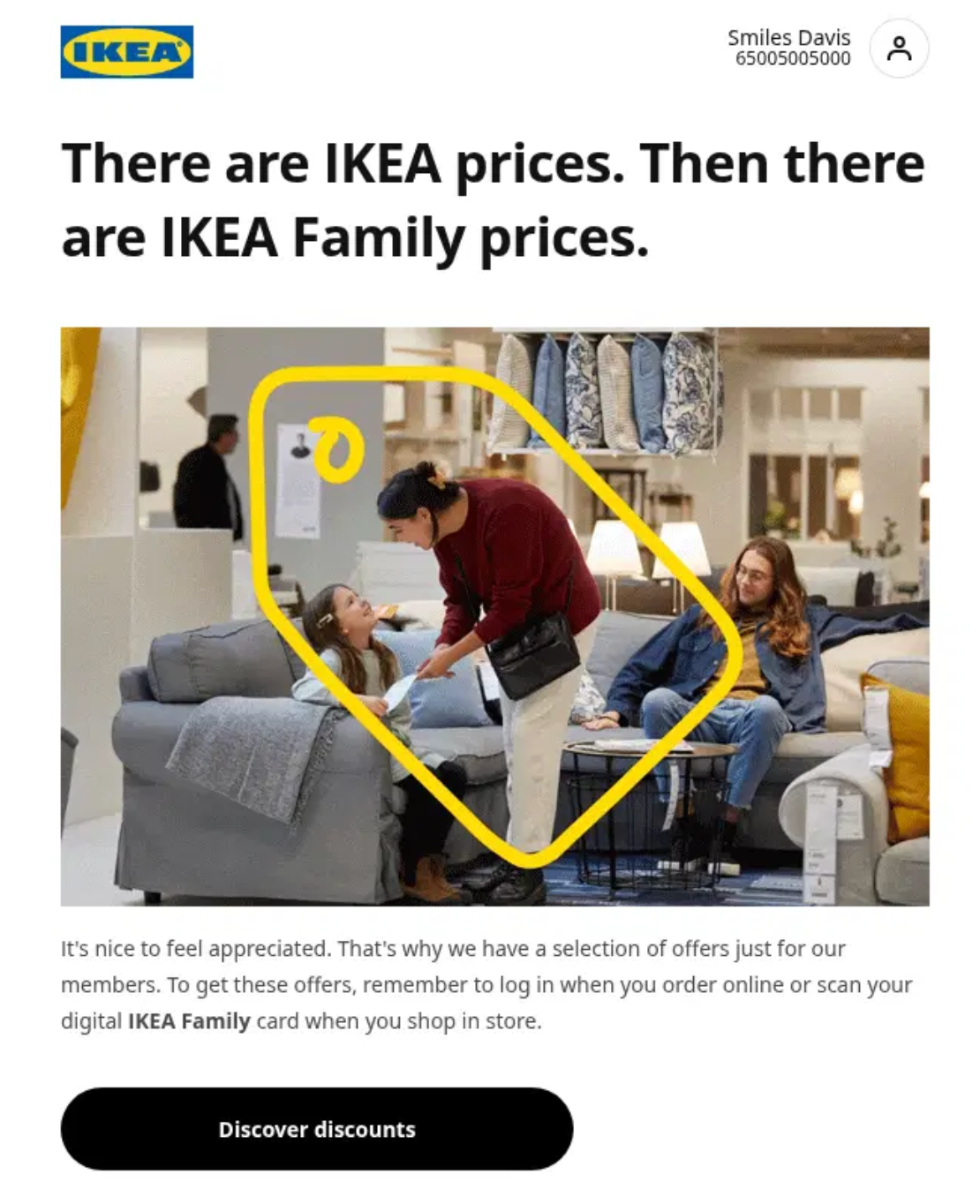
The messaging in the email is worth noting since it keeps the offer simple, reinforces the value of being a member, and ends with a clear CTA to discover available discounts. Plus, it’s an effective way to remind customers that membership includes ongoing benefits, giving them another reason to return rather than shop elsewhere.
6. Back-in-stock and wishlist alerts
This is an obvious email to retain customers because they reach customers who have already shown interest in a product. Whether someone joined a waitlist, added an item to their wishlist, or viewed it multiple times, these emails remove the friction of checking availability themselves. They also create a sense of urgency without relying on aggressive sales language, especially when inventory is limited or popular products sell out quickly.
Better Booch does this brilliantly with a straightforward back-in-stock email.
In the email below, the design opens with a bold headline and a single product image that immediately draws attention to the available flavors. Instead of filling the email with promotional copy, it briefly describes the product, highlights its benefits, and helps readers picture the experience of drinking it.
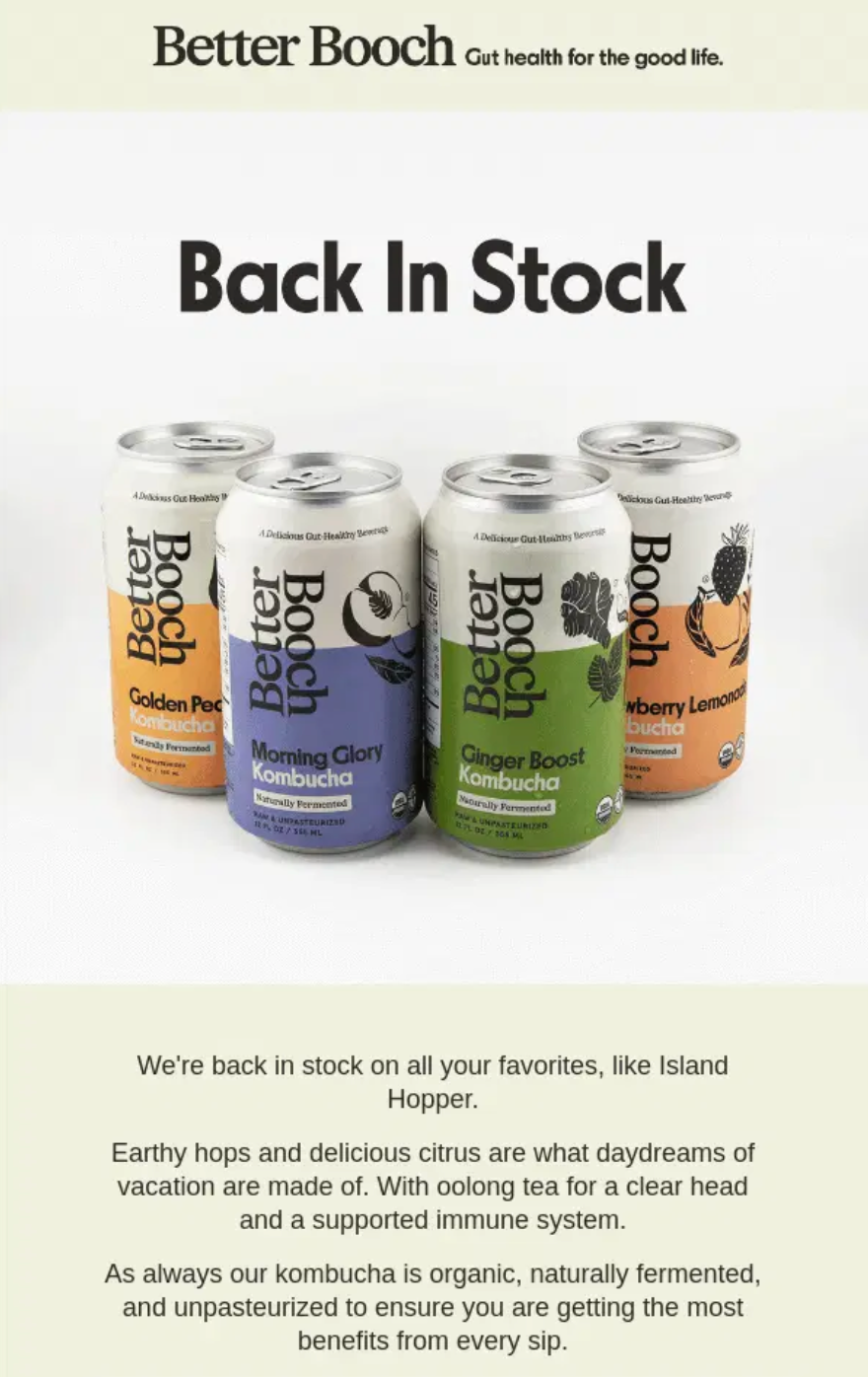
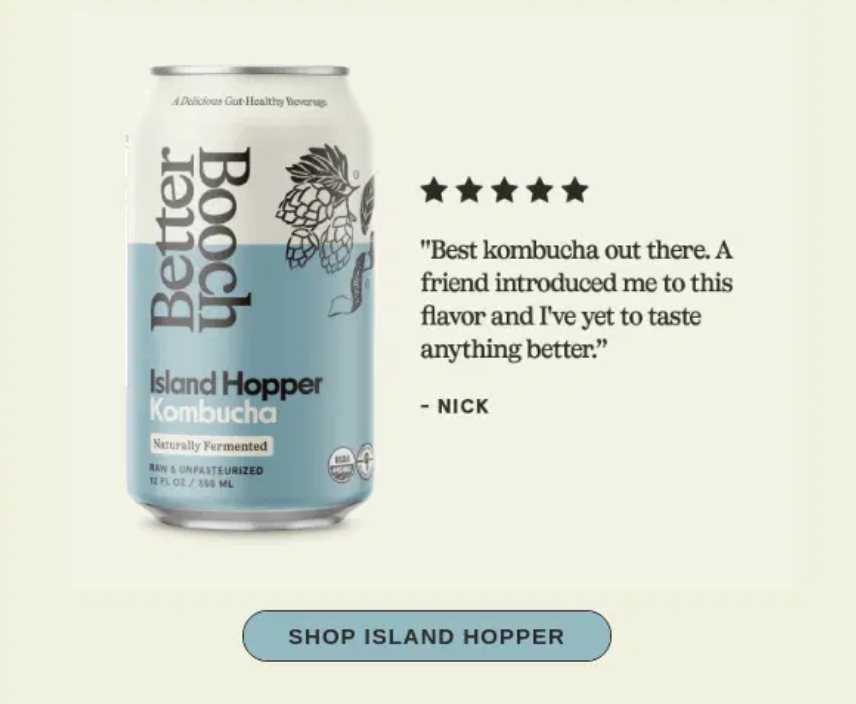
A customer testimonial adds social proof without interrupting the flow, followed by a clear CTA that makes the next step obvious. Generous white space keeps the layout uncluttered, making it easy for subscribers to scan the email and act before the product sells out again.
7. Seasonal and customer milestone campaigns
Seasonal events and customer milestones give you a natural reason to reconnect with shoppers. Unlike broad holiday promotions, these emails feel more personal because they’re tied to an individual customer’s relationship with your brand.
Here are a few ideas include:
- Birthday rewards or anniversary discounts
- Product recommendations based on previous purchases
- Early access to seasonal collections
- Holiday offers tailored to customer interests instead of blanket discounts
CAVA’s birthday email is a good example of keeping things simple yet fun. It opens with a personalized birthday greeting, uses bright visuals to make the reward feel celebratory, and lets the customer choose their own gift instead of limiting them to a single offer.
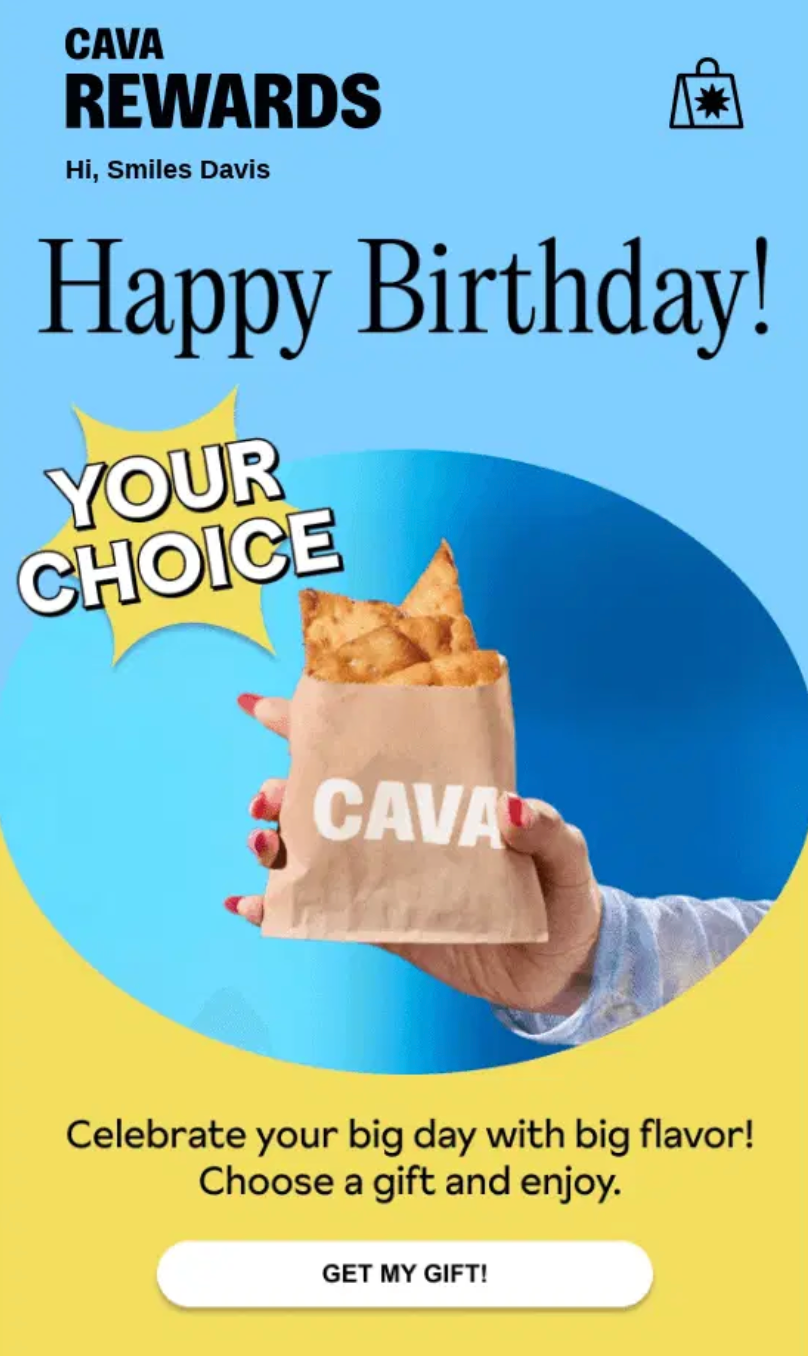
The copy stays short, making the reward the focal point, while the “Get My Gift” CTA is unmissable and leaves little room for confusion.
8. Win-back campaigns for inactive customers
You can’t afford to let customers forget your brand. Win-back emails help you reconnect with inactive shoppers before they drift to a competitor, which makes them an essential part of any ecommerce email strategy.
A good win-back campaign should:
- Target customers based on purchase history or inactivity
- Remind them what they’ve enjoyed or purchased before
- Highlight new arrivals or products they’re likely to be interested in
- Include an incentive or ask for feedback if they still haven’t returned
Popeyes’ win-back email is a great example of keeping the message warm and approachable. Right from their subject line, you know they’re not wasting any time in getting their customers back.

Once you open the email, the colorful design immediately grabs attention, while the headline, “Still Cookin’. Still Cravin’ Your Company,” is playful enough to make subscribers smile.
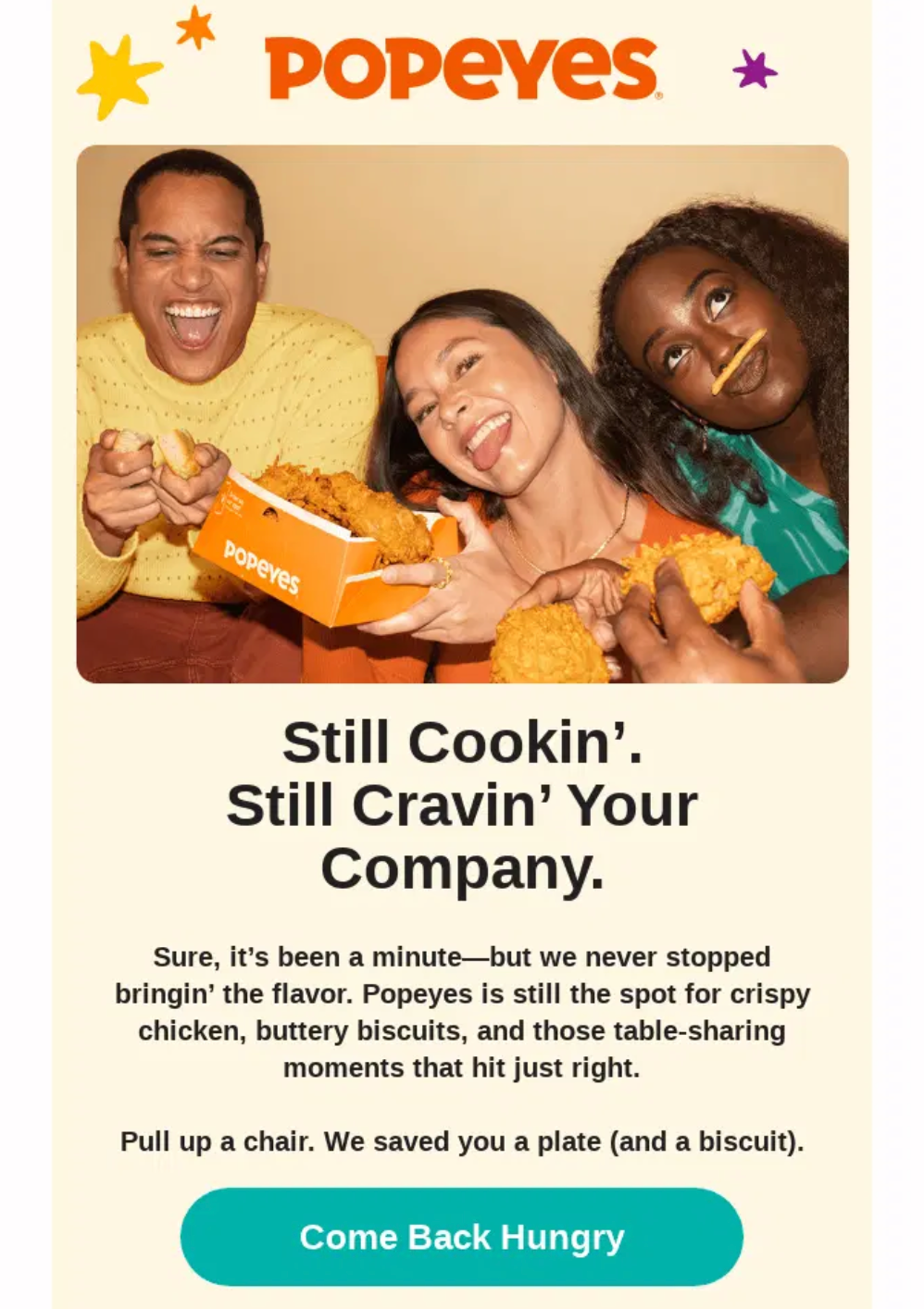
Instead of leading with a discount, the copy focuses on familiar flavors and shared moments, making the brand feel welcoming rather than pushy. The email closes with a simple CTA, “Come Back Hungry,” that fits naturally with the brand’s voice and makes returning feel like an invitation instead of a sales pitch.
Make every email count
No single email campaign will keep customers coming back.
The goal is to build a sequence of relevant touchpoints that match where each customer is in their buying journey. Every campaign, whether you’re welcoming first-time buyers, recommending products based on past purchases, or reconnecting with inactive customers, should give subscribers a reason to open the next email.
Keep improving your campaigns by:
- Testing different subject lines
- Experimenting with send times and email frequency
- Reviewing engagement and repeat purchase data to refine future campaigns
The more relevant your emails become, the easier it is to stay top of mind.