



I tested and compared the 9 best email deliverability agencies to help you figure out which one may fit your business.
Also, I categorized them as ‘pure agencies’ (though most include self-serve email delivery tools along traditional consultancy) and best email tools with deliverability service.
Hit the links below to jump to the section that’s of your interest.
- Quick overview of each deliverability agency
- Detailed comparison criteria
- Quick reviews of email deliverability services
Disclaimer: The article references software catalogue ratings, pricing, and supported services and functionalities. These were valid at the time of writing, but could be subject to change by the time you’re reading the article.
Best email deliverability companies: a snapshot
Check the quick breakdown of the services, typical use cases, and pricing (if publicly listed).
Pure agencies
| Agency | Best for | Starting price |
| InboxArmy | Mid-market and enterprise brands needing full-service email + deliverability | From $1,750/mo |
| Email Industries | Enterprise brands with complex, high-stakes challenges | Contact for pricing |
| MailBrace | Mid-market to enterprise teams needing managed email infrastructure, warmup, and deliverability at scale | Contact for pricing |
| MailAdept | SaaS and outbound teams that need deliverability managed continuously across several domains | Contact for pricing |
Email tools with deliverability service
| SaaS service | Best for | Starting price |
| Kickbox | High-volume senders needing list verification + consulting | From $5/500 verifications |
| SendX | SMBs wanting deliverability baked into their ESP | From $9,99/1K subscribers |
| EmailPond | Agencies and SDR teams managing multiple client domains | From $49/mo |
| Act-On | B2B teams wanting deliverability within their automation vendor | Contact for pricing |
| Validity | Enterprise teams needing monitoring + list hygiene + data quality | Contact for pricing |
| InboxAlly | Email marketers and outreach teams fixing sender reputation | From $149/mo |
Quick decision guide:
- If you need hands-on consulting for a complex email infrastructure problem, start with Email Industries or Mailsoar.
- If you want a full-service email partner that handles deliverability alongside campaigns, InboxArmy are the most complete options.
- For sender reputation repair specifically, InboxAlly is purpose-built for that.
Good to know: As indicated, the stricter authentication standards referenced above include Gmail’s, Yahoo’s, Outlook’s, and Apple’s.
What is an email deliverability agency
An email deliverability agency is a specialized service provider focused on ensuring your emails reach recipients’ inboxes rather than ending up in spam folders. Their work centers on the technical and strategic side of sending, including:
- Authentication setup
- IP and domain reputation management
- Inbox placement rates
- List hygiene
- Ongoing deliverability monitoring
But here, I have to take a step back and give you a broader context that explains the categorization between what I dubbed ‘pure agencies’ and ‘email tools with deliverability service.’
‘Pure agencies’ are, just as their name implies, agentic services that strictly focus on improving your deliverability regardless of the ESP you’re using. Often, they don’t have a proprietary ESP, but they can help you choose one and set it up, or migrate from one platform to another.
These services rarely appear under software catalog reviews, and it’s very hard to get publicly available testimonials (mainly due to confidentiality); of course, bar the agencies’ internal case studies. However, some of them predate Google and have had decades of impeccable track record in the industry.
‘SaaS deliverability service + consultation’ offers a different business paradigm. Simply, you get access to tools that allow your team to track and improve deliverability without any external help. But there’s an option for human deliverability consultation; either as an additional service or it’s included with specific paid plans.
Also, SaaS deliverability services can have a proprietary ESP or partner with some of the top providers.
And the bottom line is that choosing one over the other largely depends on your business volume, current internal team capacity, and the type of problem you’re facing. Read on for challenges that may merit an agency or a deliverability service.
When to hire an email deliverability company
Here are a handful of situations where bringing in an email deliverability expert, or at least a dedicated platform, makes clear sense.
- Declining inbox placement despite consistent sending. If you’re a B2B SaaS company or ecommerce brand that hasn’t changed sending practices but your open rates and engagement are dropping, the problem is likely at the infrastructure level. A deliverability agency can run a deliverability audit and pinpoint what’s going wrong. Whether it’s domain reputation decay, blocklist hits, or misconfigured DNS records.
- Scaling email volume. Growing from 50,000 to 500,000 sends per month is where most teams hit deliverability issues. Warm-up schedules, dedicated IP management, and segmentation all need to be dialed in. This is especially true for transactional emails, where even small delivery failures hurt the user experience. In this case, a SaaS service would also work, assuming you have a strong internal team.
- ESP migration. Moving from one email service provider to another is a high-risk window for deliverability. An agency can manage IP warming, authentication setup, and reputation transfer so you don’t lose months of progress. Also, some SaaS platforms offer load balancers that help you manage the transition without hurting deliverability.
- Blocklist incidents. Getting blocklisted is an emergency. An email deliverability agency that handles remediation and has ISP relationships can resolve this far faster than your in-house team working through support tickets.
- No internal deliverability expertise. If nobody on your team knows how to interpret Google Postmaster data, read bounce logs, or manage feedback loop signals, you’re flying blind. Here, it’s often cheaper, and certainly faster to bring in a ‘pure agency’ than build your team of experts from scratch.
For more on identifying root causes yourself, see our guides on diagnosing deliverability problems and improving your deliverability step by step.
Email deliverability services: comparison approach
We reviewed each agency and platform based on publicly available information and our experience, including:
- Official websites
- Published service pages
- Verified client testimonials
- Third-party review platforms (G2 and Capterra)
- Agentic track record
Then, we evaluated every entry against six criteria:
- Core focus vs. general email marketing (primary specialty or a side offering)
- Services offered and depth (one-time audit vs. ongoing management)
- Third-party ratings from G2, Capterra, and Trustpilot (secondary criteria for agencies)
- Verifiable client testimonials (we only include quotes we can trace to a published source)
- Target audience fit (an SMB cold-outreach platform has different strengths than an enterprise consulting agency managing millions of monthly sends).
Now, I have to stress again that choosing one service or agency for your business is individual decision, largely dictated by your needs. The reason for this is that we’re talking about relatively mature email systems that may face specific needs.
Anyway, this write up is designed to help you cut through the noise and make an informed choice.
Best deliverability agencies reviews
Check how deliverability agencies and SaaS email deliverability providers stack against each other. Click here, if you’d like skip agencies and jump to deliverability providers.
Reminder: Most ‘pure agencies’ don’t appear under software catalogue ratings. And it’s very hard to find public testimonials due to confidentiality. But this isn’t a deal breaker by any means.
InboxArmy

Ratings: N/A
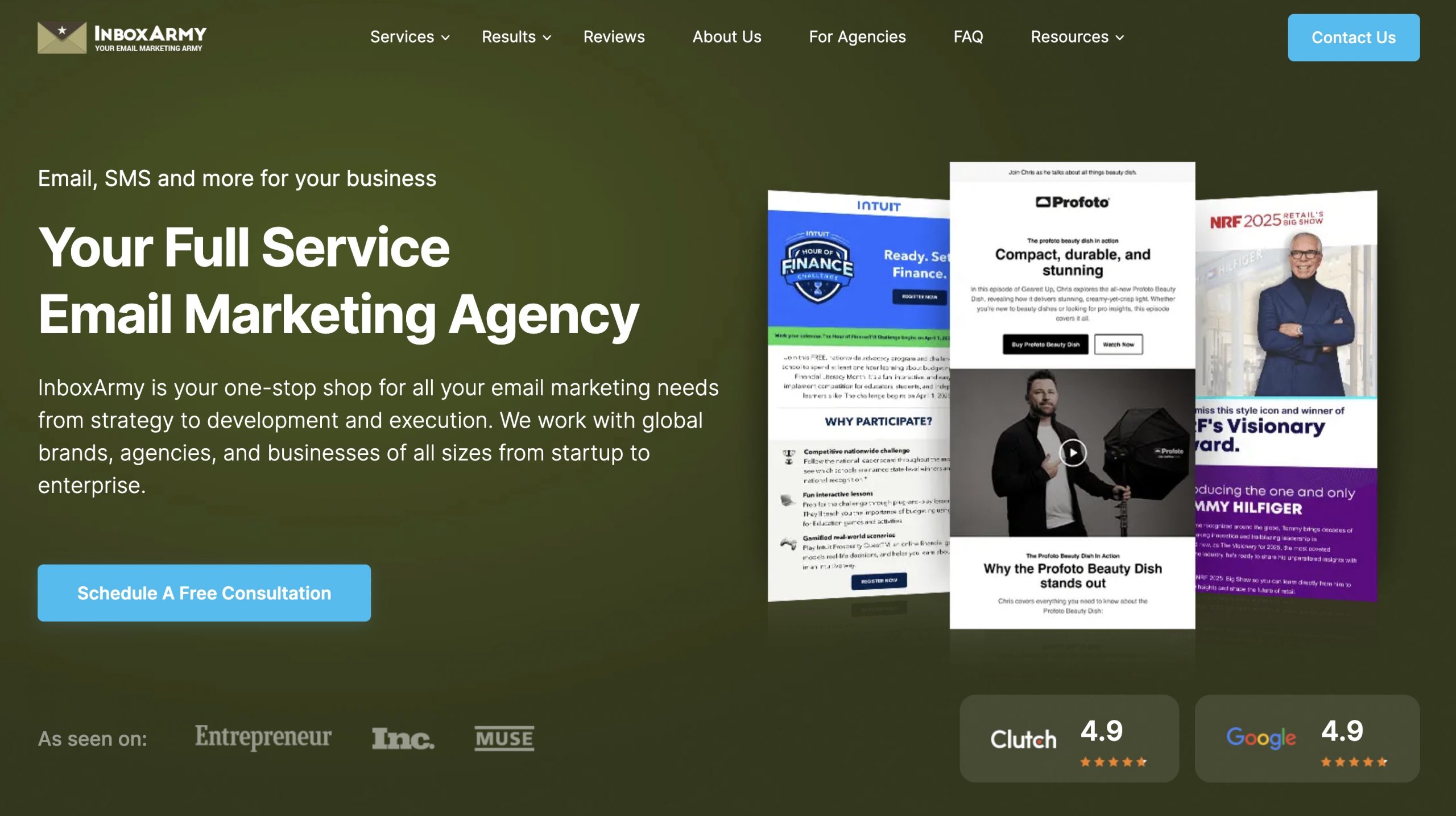
A lot of entries on this list specialize in one thing, but InboxArmy covers the full email lifecycle. They’re a full-service email marketing agency with a dedicated deliverability practice: strategy, design, coding, campaign management, ESP migration, and deliverability.
All of the above is managed by a dedicated account manager and execution team. That breadth makes them the strongest option if your email program needs more than just technical fixes.
Best for: Mid-market and enterprise brands that need a full-service email partner with deliverability baked into the broader engagement strategy.
Services:
- Email marketing strategy and audit
- Email design and coding
- Campaign management
- List clean-up and segmentation
- Deliverability consulting
- ESP migration support
- Automated journey setup
Pricing:
- Audits from $3,000
- Campaign Management from $1,750/month
- Deliverability Services from $3,000
- Full-Service Retainer from $5,000/month
Testimonials: N/A
Limitations: InboxArmy now offers deliverability services as a standalone. While you may benefit from the full-service model, you can customize your scope to your technical or deliverability problems.
Important note: As per their documentation, the retainer may vary from ~$5,000 to $10,000+ per month, depending on your scope and needs.
Email Industries

Ratings: N/A
Operating since 1999, Email Industries has one of the longest track records in dedicated email deliverability consulting. Interestingly, their tagline, “Email Deliverability Experts Since 1999,” predates most current ESPs.
The agency frames their work around revenue protection: if your emails don’t reach the inbox, you’re losing money, and they position themselves as the team that prevents that at enterprise scale.
And more importantly, the focus is on deep technical expertise for complex deliverability problems; not lightweight audits.
Best for: Enterprise brands and top-tier senders with complex, high-stakes deliverability challenges that require senior-level expertise.
Services:
- Email deliverability consulting
- Deliverability audits
- Sender reputation remediation
- Complex issue resolution
- Enterprise deliverability support
Pricing: Not publicly listed; you need to contact them for a quote. Given their enterprise positioning, expect pricing to reflect the complexity and scale of the engagement.
Testimonials: N/A
Limitations: Independent evaluation difficult until you engage directly. But their longevity and the list of partners is reassuring.
Quick Tip: Check our article on deliverability consultants for more on the tradeoffs between hiring a firm vs. working with an individual consultant.
Testimonials:
“I’d recommend Email Industries because they were strong communicators and true collaborators who solved our deliverability challenges, helping us protect our domain reputation and achieve consistent, high-performing email results.” – Shane Johns, WithMe, Inc.
MailBrace

MailBrace is an email deliverability consultancy that handles the technical and infrastructure side of email, the part most teams get wrong. They set up and manage sending infrastructure end-to-end: domains, inboxes, authentication, IP, and domain reputation, and warmup.
What sets them apart is scale and range. They work with both B2B and B2C senders, support cold outbound and marketing email, and have managed thousands of inboxes across mid-market and enterprise accounts. Where many agencies hand you a one-time audit, MailBrace runs deliverability as an ongoing system. They monitor reputation, catch problems early, and keep inbox placement steady as you scale.
Best for: Mid-market and enterprise companies (B2B or B2C) that send at volume and need deliverability fully managed, whether that’s cold outbound, marketing email, or both. Also a strong fit for marketing and lead-gen agencies that want deliverability handled for their clients.
Services:
- Email deliverability audits and inbox placement testing
- SPF, DKIM, and DMARC setup and management
- Cold email infrastructure setup (domains, inboxes, DNS)
- Blocklist monitoring and removal
- Bounce and spam complaint management
- ESP / sending platform configuration
- Ongoing monitoring and reporting
Pricing: Not publicly listed; contact for a quote.
Testimonials: N/A
Limitations: No public pricing.
MailAdept

Ratings: N/A
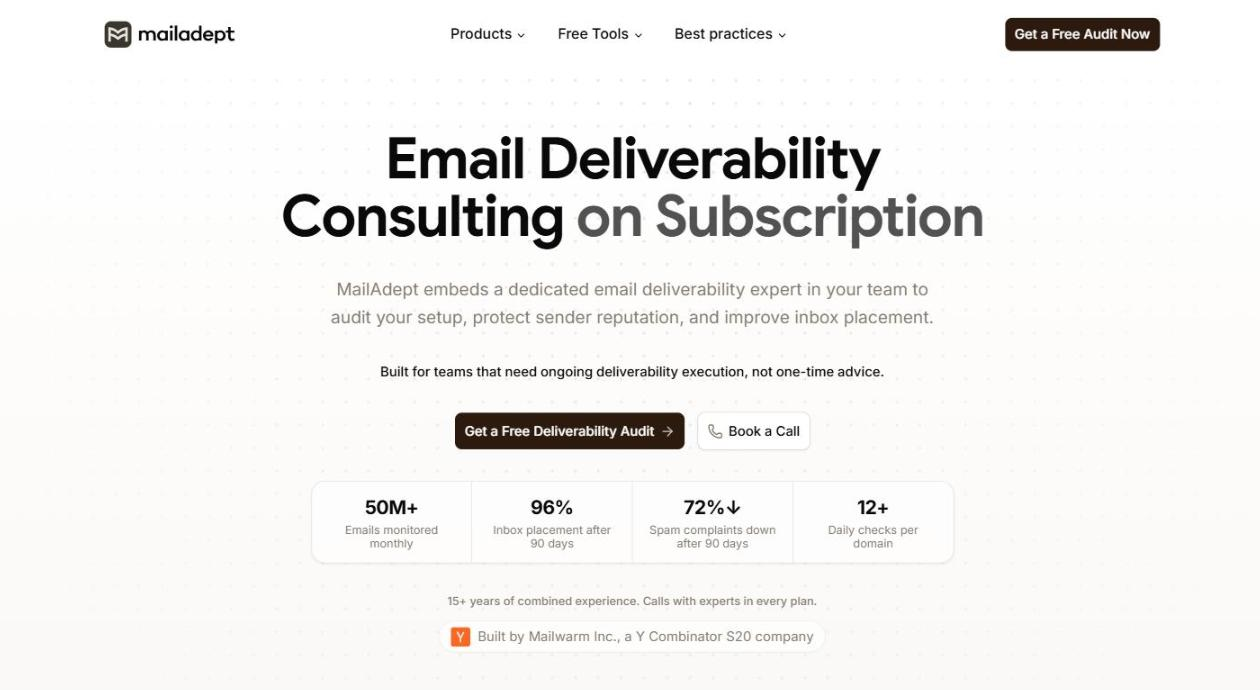
MailAdept is an email deliverability consulting firm that runs deliverability as a subscription rather than a one-off project. It embeds a dedicated deliverability expert in the client’s team, priced per domain and billed monthly, with a standing weekly session between that expert and the team.
Where they stand out is continuity. Deliverability tends to drift back after it’s fixed: a DNS change breaks authentication, a new sending tool joins the domain, or cold outbound drags down the transactional stream. MailAdept runs 12+ automated checks per domain every day and reviews what moved with the client each week. It’s built by Mailwarm Inc. (Y Combinator S20) and monitors 50M+ emails a month.
Best for: SaaS companies, outbound teams and agencies running several sending domains that want deliverability handled week to week without hiring in-house.
Services:
- Deliverability audit and email infrastructure review
- SPF, DKIM, DMARC, BIMI and MX setup, alignment and maintenance
- Domain structure and stream separation across outbound, marketing and transactional email
- Sender reputation and inbox placement monitoring, 12+ checks per domain daily
- Blacklist monitoring and delisting
- Sending platform and routing configuration support
- Weekly review session with a dedicated deliverability expert
Pricing: Not publicly listed; priced per domain and billed monthly, with a four-month minimum. A free deliverability audit is available before any engagement.
Testimonials:
“Mailadept helped improve my email deliverability by getting more of my emails into inboxes instead of the spam folder, which led to more replies and better engagement.” – William, CEO, Prime Match Recruiting.
Limitations: No public pricing, and the four-month minimum isn’t designed for one-off fixes.
Best email tools with deliverability service: reviews
Kickbox

Ratings:
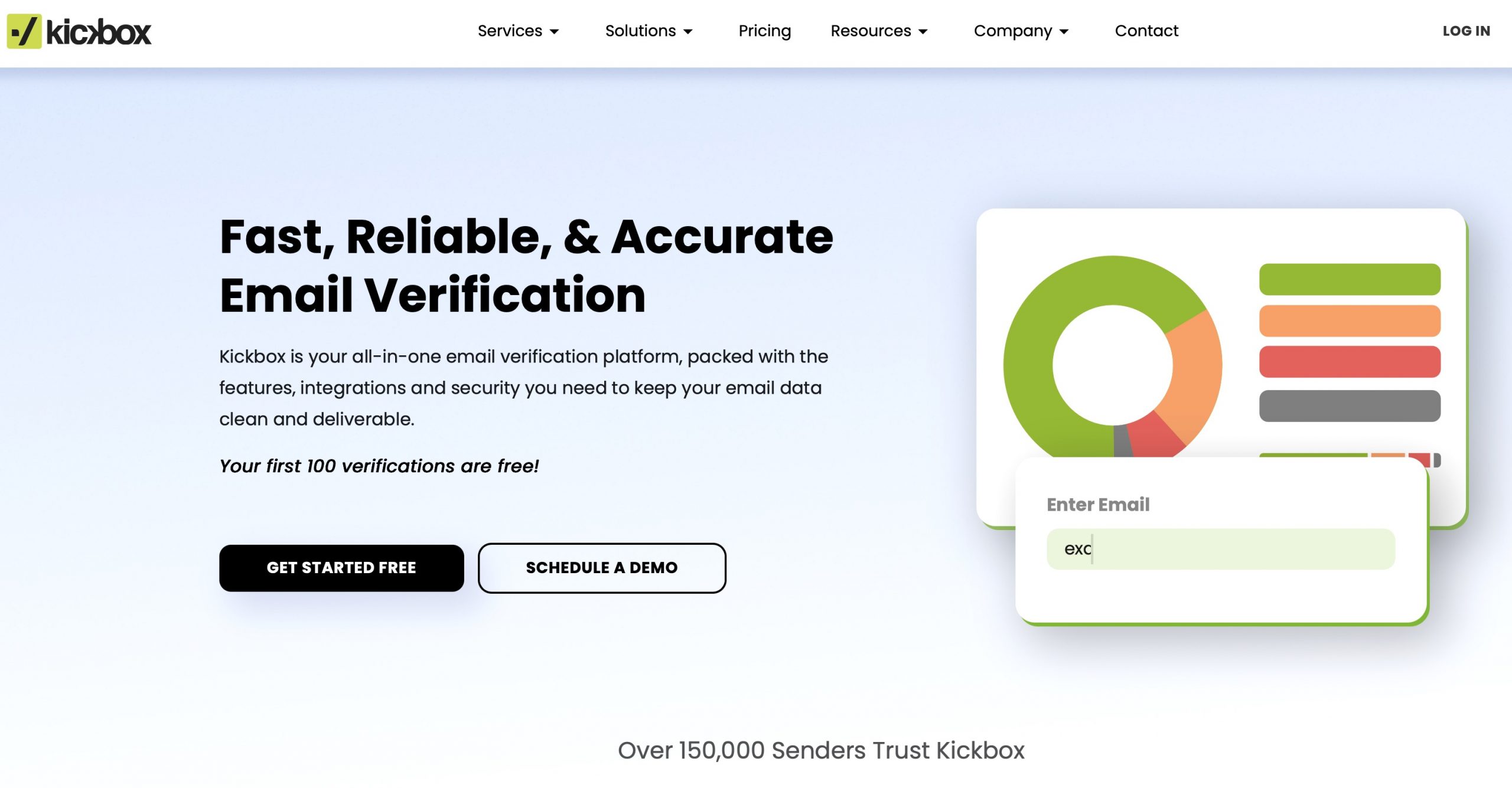
Your deliverability problem might actually be a list quality problem; and that’s where Kickbox fits in. It’s primarily an email verification and list hygiene platform, not a consulting agency. The core product removes invalid, risky, and fake addresses before you send.
Also, the proprietary SendEx Score goes beyond a binary valid/invalid check to estimate each address’s quality. For teams that also need strategic guidance, Kickbox offers deliverability consulting as a separate, custom-priced service.
Best for: Teams that need robust email list hygiene combined with optional deliverability consulting. It can be especially useful for high-volume senders needing scalable verification.
Services:
- Email verification and list cleaning (pay-as-you-go and monthly plans)
- Real-time API verification
- Deliverability consulting (contact for pricing)
- CRM and ESP integrations
- SendEx Score
- Detailed reporting
- 100 free verifications for new accounts
Pricing:
- Pay-as-you-go from $5/500 verifications
- For enterprise-level usage and deliverability consulting, get in touch with sales.
Testimonials:
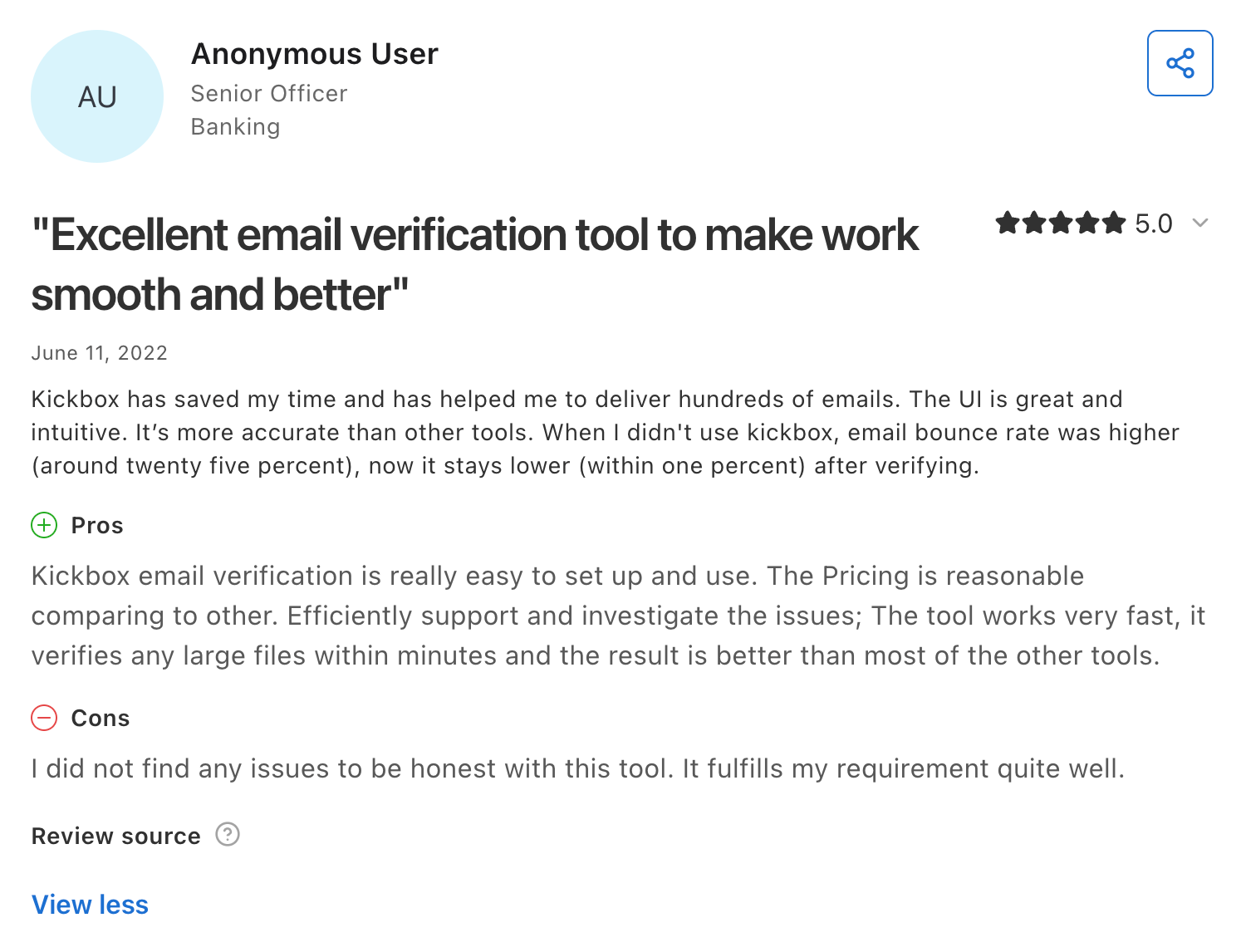
“Kickbox email verification is really easy to set up and use. The Pricing is reasonable comparing to other. Efficiently support and investigate the issues; The tool works very fast, it verifies any large files within minutes and the result is better than most of the other tools.” – Capterra reviewer

Limitations: Deliverability consulting is a supplementary service, not their core competency. If your issues go beyond list hygiene; (for instance: authentication misconfiguration, IP reputation damage, spam trap contamination) you’ll likely need a dedicated deliverability agency alongside Kickbox.
SendX

Ratings:
Rather than bolting deliverability onto your existing ESP, what if it were built-in from the start? That’s SendX’s approach, and you basically get an email marketing platform with the following:
- Sender reputation monitoring
- SPF/DKIM/DMARC authentication
- Automatic IP warming
- Deliverability analytics (delivery rates, bounce rates, spam complaints)
For high-volume senders, they offer dedicated IP addresses. Under the hood, their infrastructure integrates with Amazon SES, Mailgun, and SendGrid.
Best for: SMBs and growing businesses that want solid deliverability managed within an all-in-one email marketing platform, with 24/7 support included.
Pricing: Contacts-based pricing – for instance, you pay $39.99 for 5,000 contacts. Check their official pricing page to get a better idea of what’s included and the extra services.
Testimonials:
“SendX has been amazing for my company. We exist in the personal finance space and do some work with crypto so it was a challenge to find an email system that would allow us to send this type of content while offering the suite of automation tools we needed. SendX was the perfect solution to our email marketing problems.” – G2 review – Nate O. Web Developer
Limitations: This is an ESP with deliverability features, not a deliverability service. If you have a serious inbox placement crisis, SendX’s built-in features likely won’t be enough; you’d need a specialist alongside it.
EmailPond


Ratings:
- G2: N/A
- Capterra: N/A
EmailPond is a sender reputation platform built for agencies, SDR teams, and marketers running outbound across multiple domains. Where standard warmup tools operate inbox by inbox, EmailPond connects your domains and mailboxes into a single reputation network. As inboxes engage across that network, trust builds for every domain attached to it, so a new mailbox inherits reputation from an established system instead of starting from zero.
Setup connects Google Workspace and Microsoft 365 mailboxes through OAuth. From there, warmup runs automatically in the background while you track reputation scores, inbox placement rates, and sender health across every connected domain from one dashboard.
Best for: Agencies and SDR teams that manage outbound across multiple client domains and need sender reputation built at the network level before campaigns go out, not after they land in spam.
Services:
- Network-level inbox warmup across connected domains and inboxes
- Real engagement signals: opens, replies, and conversation threads that mailbox providers register as healthy sender activity
- Real-time reputation scoring and inbox placement tracking per domain
- Multi-client dashboard showing inbox count, warmup status, and reputation score per client, plus a rolled-up network figure
- OAuth inbox connection for Google Workspace and Microsoft 365
- REST API for mailbox provisioning, reputation lookups, and webhook alerts on reputation changes
- API access on every plan with no feature gating by tier
Pricing: Pricing is inbox-count based with no feature tiers. Every plan includes full warmup, reputation monitoring, and API access. Free to start, no credit card required.
Testimonials:
N/A
Limitations: EmailPond covers warm-up and reputation only. It does not include list verification, spam content testing, campaign sending, or lead sourcing, so it works alongside your existing sending stack rather than replacing any part of it. Teams that need pre-send spam checking or list hygiene tools will need a separate product. No G2 or Capterra listing exists, and no third-party review coverage was available at the time of writing.
Act-On

Ratings:
For B2B marketing teams already invested in marketing automation, Act-On offers a deliverability services layer built directly into the vendor relationship. Okay, but what does this actually mean?
Instead of coordinating between your automation platform and a separate deliverability agency, you get a bunch of services bundled together, and monitored from the same team that runs your campaigns.
Best for: B2B marketing teams already using or evaluating marketing automation platforms who want email deliverability expertise built into their vendor relationship.
Services:
- Dedicated IP management
- Email list cleaning
- Enhanced deliverability support
- Email template production
- Campaign management
- Modular template creation
- Email automation
- ESP migration support
- Inbox placement monitoring
Pricing: You need to contact them for pricing. To be perfectly fair, they show a $900 per month at their website, but you still need to click ‘Get a quote’ to get the actual number.
Testimonials:
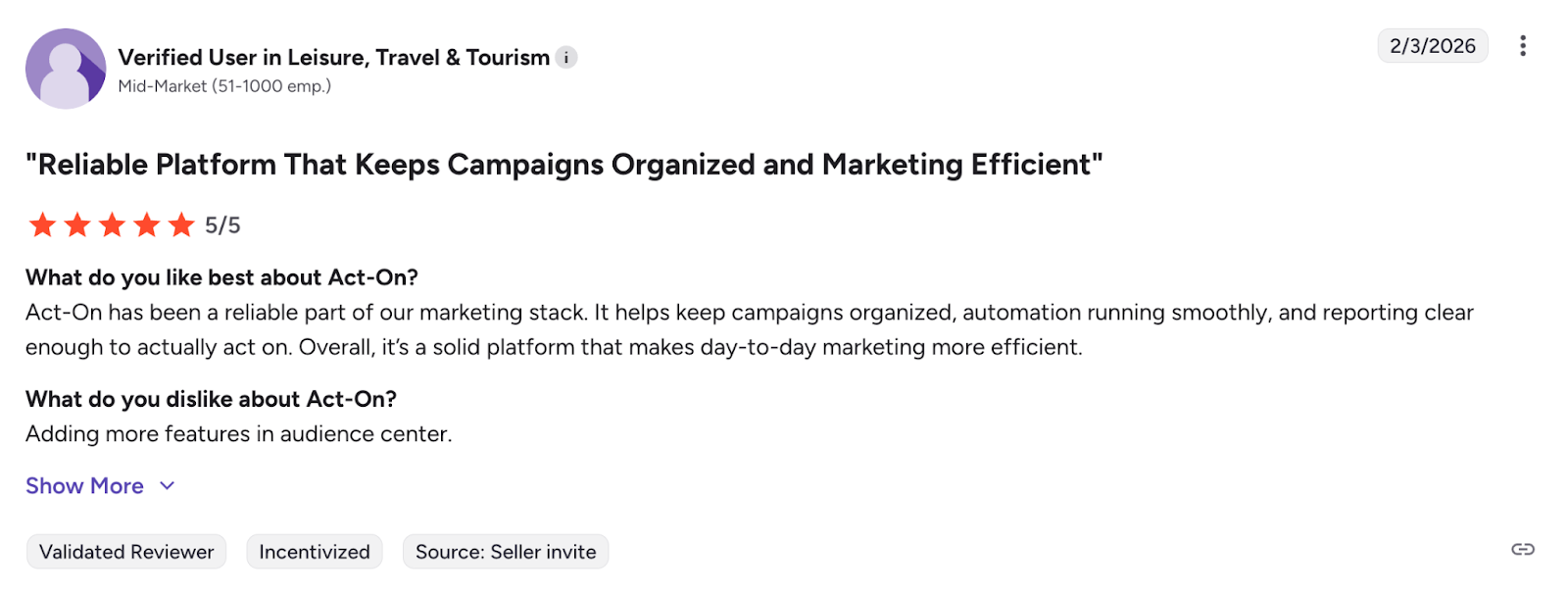
Act-On has been a reliable part of our marketing stack. It helps keep campaigns organized, automation running smoothly, and reporting clear enough to actually act on. Overall, it’s a solid platform that makes day-to-day marketing more efficient. – Verified G2 user – Travel & Tourism industry

Limitations: Deliverability services are tied to the Act-On platform. If you’re not using (or planning to use) Act-On for marketing automation, their deliverability services weren’t available as a standalone offering at the time of writing.
Validity


Ratings: N/A
Validity’s integrated suite can be compelling for enterprise email teams juggling separate tools for inbox monitoring, list verification, and CRM data.
And this is one of the services that sit somewhere between SaaS and a pure agency, bundling up three different products (see Services section below).
So, instead of stitching together separate email deliverability tools, you get a unified platform designed for scale.
Best for: Enterprise email teams that need an integrated platform combining deliverability monitoring, list hygiene, and data quality at scale.
Services:
- Everest (deliverability monitoring and inbox placement tracking)
- BriteVerify (real-time email list validation)
- DemandTools (CRM data quality) sender reputation tracking, inbox placement monitoring across major ISPs, and campaign performance analytics.
Pricing: Not publicly listed — contact for enterprise pricing.
Testimonials: N/A.
Limitations: Enterprise pricing without public benchmarks makes budgeting hard. This is a platform play, but they also offer deliverability consulting service.
InboxAlly

Ratings:
InboxAlly offers the most depth among the seed-based warm-up platforms on this list. So, it addresses unique use cases mainly for outreach and marketing purposes, offering agentic capabilities on top of SaaS tools.
The service works by sending your emails to a proprietary network of real seed addresses across different machines, IP addresses, and US locations.
Best for: Email marketers, cold outreach teams, and SaaS companies needing to repair or build sender reputation without switching ESPs. It’s especially useful for teams managing multiple domains or IP addresses.
Services:
- Automated warm-up via proprietary seed network
- Sender reputation repair
- Multiple sender profile management
- Real-time inbox placement monitoring
- Broadcast auto-detect
- Customizable engagement profiles
- “Prime the pump” for broadcasts
- Platform-agnostic operation
- Strategy sessions (Premium)
- Enterprise-level dedicated support
Pricing:
- Starter: $149/month (100 seed emails/day, 1 sender profile)
- Plus: $645/month (500/day, 5 profiles)
- Premium: $1,190/month (1,000/day, 10 profiles + strategy sessions)
- Enterprise: custom
Testimonials:
“I like InboxAlly because it’s a great email warm-up software that increases the odds of our emails not going to spam. The email deliverability is really great, which improves our chance to land directly in our target inboxes.” — Verified G2 reviewer
Limitations: Seed-based warm-up carries the same philosophical debate as Warmy.io: artificial engagement may not fully replicate genuine subscriber behavior. At $149/month minimum, it’s also notably more expensive than Warmy.io’s $49 starting point.
How to collaborate with an email deliverability service provider
Working with a deliverability agency is a process, not a one-time fix. The best results (high deliverability rates) come from treating it as an ongoing partnership. Whether you’re hiring a full-service email deliverability company or using a self-serve SaaS platform, the engagement typically follows three phases.
Phase 1: Discovery & audit
The agency conducts a comprehensive deliverability audit. It involves the following:
- Reviewing your email authentication records (SPF, DKIM, DMARC)
- Assessing your domain reputation with mailbox providers
- Checking IP reputation
- Evaluating your approach to maintaining a healthy sender reputation across all sending streams
- Analyzing list quality
- Establishing baseline email deliverability metrics (bounce rates, spam complaint rate, inbox placement rate, and engagement signals)
A good agency will frame findings around business impact, not just technical scores. For more on this process, see our guide on a full sending reputation audit. And expect discovery to take one to two weeks.
Phase 2: Implementation
With the audit complete, the agency moves into active fixes:
- SPF, DKIM, DMARC, and BIMI configuration (or corrections to existing records)
- IP warm-up schedules for new or rested IPs
- List hygiene (removing hard bounces, inactive subscribers, and spam traps)
- Segmentation improvements to boost engagement
- Template optimization to reduce spam filter triggers
Timelines vary: basic authentication fixes take a week or two, and a full IP warm-up typically runs four to eight weeks. If your sending infrastructure is complex; multiple ESPs, transactional and marketing streams on separate IPs, expect the process to be longer.
Phase 3: Ongoing monitoring & support
Deliverability isn’t a set-and-forget operationas mailbox providers update their spam filters constantly, and your sender reputation shifts with every send. The ongoing phase typically includes the following
- Real-time blocklist monitoring
- Feedback loop signals integration to catch spam complaints early
- Monthly reporting on key email deliverability metrics
- Reputation scoring for both IP and domain
This is where your IP’s sending history becomes critical context. A good agency will flag reputation dips before they escalate. For a benchmark on where you stand, see our breakdown of how different providers compare on deliverability.
Wrapping up
Choosing among the best email deliverability agencies comes down to your specific situation.
- For complex enterprise problems: Email Industries and Mailsoar offer dedicated, deep-expertise consulting.
- For a full-service email partner: InboxArmy is the most complete option.
- If you prefer self-serve platforms: InboxAlly give you the email deliverability tools to monitor, test, and repair reputation on your own terms.
Keep in mind that, no single agency or SaaS service is universally “best.” The right choice depends on your sending volume, technical maturity, budget, and whether you need hands-on support or monitoring tooling.
Whichever path you take, ideally you’ll pair agency work with strong email deliverability practices and in-house monitoring to protect the deliverability revenue impact long-term.
FAQ
What is the best email deliverability company?
It depends on your use case. For enterprise-grade deliverability consulting with deep technical expertise, Email Industries has the longest track record. For full-service email marketing with deliverability included, InboxArmy is a strong choice. If you want a self-serve platform for warm-up and reputation repair, InboxAlly offers transparent pricing and solid G2 reviews. There’s no one-size-fits-all answer; match the agency to the problem you’re solving.
How much do email deliverability services cost?
Costs range widely. On the self-serve side, InboxAlly starts at $149/month. For managed services, InboxArmy’s campaign management starts from $1,100/month, with strategy audits from $2,500. Agencies like Mailsoar, Email Industries, and Validity require custom quotes; but that’s the norm for enterprise engagements.
How long does it take to improve email deliverability?
Timelines depend on severity. Basic authentication fixes (SPF, DKIM, DMARC) take one to two weeks. IP warm-up for a new or rested IP address typically runs four to eight weeks of gradual volume increase. Full sender reputation recovery; especially after blocklist incidents or sustained decline, can take three to six months of consistent effort. The key is setting realistic expectations and maintaining improvements long-term.
What’s the difference between email deliverability and email marketing agencies?
An email deliverability agency focuses on the technical and infrastructure side: authentication setup, IP and domain reputation management, inbox placement optimization, list hygiene, and monitoring. Their goal is making sure emails reach the inbox. An email marketing agency focuses on campaign strategy, creative content, segmentation, automation, and revenue optimization, assuming emails are already arriving. Some agencies, like InboxArmy, cover both.
Overall, the logic should be the following:
- If your emails reach the inbox but don’t convert, you need a marketing agency.
- If they’re hitting spam folders or not arriving at all, you need a deliverability agency; or at minimum, tools built specifically for deliverability to diagnose what undelivered emails actually cost your business.