


Email startups have an unusual survival rate. Some get acquired. Some get absorbed. Some get renamed (by the company that bought them) into something that sounds like a notification setting.
Superhuman is the latest example.
In 2019, Superhuman launched with a $30/month price tag, a mandatory onboarding call with a specialist, and an invitation-only waitlist that made people feel lucky to be allowed to pay for email. It was either a masterclass in luxury positioning or the most elaborate product launch of an email productivity tool in history; depending on who you asked.
In July 2025, Grammarly acquired Superhuman. Then Grammarly renamed itself “Superhuman.” The email client that once prided itself on exclusivity is now a feature inside a renamed productivity suite that used to check your spelling.
That’s what the email startup landscape looks like now: some of the most ambitious companies have been absorbed, rebranded, or folded into enterprise portfolios, while a new generation is building the same categories from scratch with better timing and, sometimes, better margins.
This guide covers 14 of the best email tools across five categories: email clients, marketing and newsletter platforms, growth and transactional tools, AI writing and sales outreach, and email security.
There are thriving, bootstrapped independents and post-acquisition products are still doing the work under new owners… yet, all of them are shaping what modern email looks like.
Quick picks
- Beehiiv is best for newsletter creators who want monetization infrastructure, audience analytics, and a platform with $30M in annualized revenue to prove the model works.
- Instantly.ai is best for sales teams running cold email at volume who want unlimited email accounts and built-in warmup at every tier, without per-account fees that scale against you.
- Loops is best for SaaS teams who need lifecycle email triggered by product events, not broadcast campaigns sent on a marketer’s schedule.
- Shortwave is best for Gmail-native knowledge workers who want real AI triage; not a badge that says “AI-powered” on a 2019 inbox.
- Lavender is best for sales reps who want to write better emails themselves rather than outsource the judgment to a language model.
- Hey by Basecamp is best for anyone who has ever looked at their inbox and thought “what if someone actually thought hard about this.”
- EmailSendX is best for agencies and multi-brand teams that want email marketing, automation, CRM, and client workspaces in one platform while keeping control of their own sending infrastructure.
- Sendlane is best for e-commerce brands who want email, SMS, product reviews, and forms in one subscription, with unlimited-contacts pricing that does not punish list growth.
- CampaignLark is best for businesses, agencies, and growing teams who want usage-based email marketing; pay per email sent, not per contact stored, without splitting the budget across three separate tools
- Dyspatch is best for enterprise teams managing email templates across multiple departments, locales, and an approval process that currently lives in a Confluence page and four Slack threads.
- Iterable is best for enterprise marketing teams who need cross-channel campaign orchestration across email, push, SMS, and in-app content at scale
- Kickbox is best for any team cleaning a large email list before a campaign who wants pay-as-you-go verification with no subscription commitment
- Superhuman is now available only as part of the Grammarly-renamed Superhuman Suite ($33/user/month); the standalone email client no longer exists as an independent product
- Jacquard (formerly Phrasee) is the enterprise option for AI-driven brand language optimization at $24K+/year; not a tool for smaller teams
- Tessian no longer exists as a standalone product; its human-layer email security capabilities are now integrated into Proofpoint Adaptive Email DLP
Email startups at a glance
| Startup | Category | Status | Funding / ARR | Pricing from |
|---|---|---|---|---|
| Superhuman | Email client | Acquired (Grammarly, Jul 2025) | $114M raised | $33/mo (suite) |
| Hey | Email client | Active, bootstrapped | Self-funded | $99/year |
| Shortwave | Email client | Active, Sequoia-backed | Undisclosed | $7/mo |
| Sendlane | Email marketing | Active, $23M raised | $11.3M ARR | ~$100/mo |
| Beehiiv | Newsletter | Active, $50M raised | $30M ARR | $43/mo |
| Loops | SaaS email | Active, $3.2M seed | Undisclosed | $49/mo |
| EmailSendX | Email marketing | Active (launched Jan 2026) | Undisclosed | $14/mo |
| CampaignLark | Email marketing | Active (launched 2024) | Undisclosed | $15/mo |
| Iterable | Growth marketing | Active, independent | $240M ARR | $20K+/year |
| Dyspatch | Email production | Active, $13.4M raised | Undisclosed | $149/mo |
| Jacquard (Phrasee) | AI copywriting | Rebranded, acquired | Undisclosed | $24K+/year |
| Lavender | AI email writing | Active, $13.2M raised | Undisclosed | $29/mo |
| Instantly.ai | Cold email / outreach | Active, bootstrapped | $20M ARR | $37/mo |
| Tessian | Email security | Acquired (Proofpoint, Dec 2023) | $120M raised | N/A |
| Kickbox | Email verification | Acquired (Ziff Davis, 2020) | Undisclosed | $5 / 500 verifications |
How we evaluated email startup products
Mailtrap keeps its fingers on the pulse of the email industry; we closely analyze how startups come to life, evolve, and get acquired; or, admirably, continue to carry the flag of bootstrapped SaaS.
Yet, this isn’t your typical listicle where we only discuss the ‘Bests… for this and that.’ It’s more of a holistic overview of a mature industry that keeps probing fresh niches and use cases.
So, here are some things to keep in mind:
- We looked closely at software catalog reviews, general user experience, and analyzed the use cases against implementation complexity, or lack thereof. All based on 10+ years of experience in email infrastructure.
- Since we’re talking about startups, the business lifecycle and modeling is part of each review, which should help you make a more informed decision should you consider adding one of these to your stack.
- All the prices, feature lists, and offerings featured here were valid at the time of writing but could be subject to change.
- This is one of the few listicles where we discuss enterprise-only software which we haven’t tested, but has been making waves in the industry.
- You’ll see a handful of companies that came to life more than 10 years ago, these are honorary mentions showcasing their evolution as startups and services. A lot of them recently got funded or merged.
- The article and content itself is like a curated list born out of a team effort to analyze the email space, competitors, and how email features evolve. And this is the third iteration of the topic, circa 2026.
Email clients
The email client market is still dominated by Apple Mail, Gmail, and Outlook, which together own 83% of email opens (2025 data). The startups in this category are not chasing that market share. They are making a different bet: that a meaningful subset of professionals will pay a premium for a radically different inbox experience.
Superhuman [ACQUIRED]

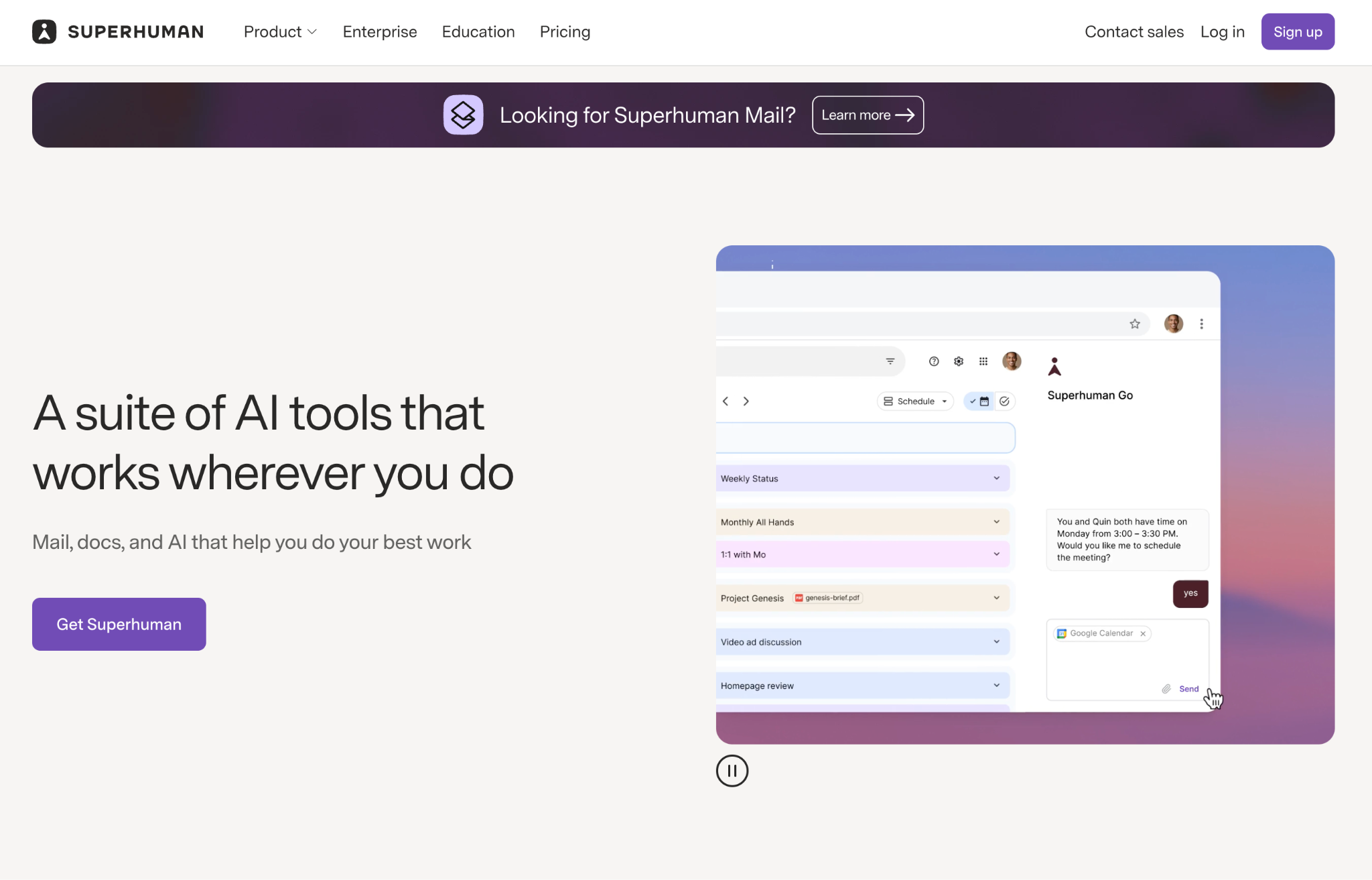
As mentioned, Superhuman positioned itself as a luxury email client: keyboard-first, engineered for speed, designed for people who consider their time worth paying for. The exclusivity was not a bug. It was a deliberate part of the product identity.
Key capabilities
- Keyboard-first interface with shortcuts for every action
- AI triage and split inbox
- Read receipts (similar to instant messaging services) and email tracking
- Snooze, reminders, and scheduled send
- Team collaboration: comments and shared assignments
Pricing
No longer sold as a standalone product. Available only as part of the Superhuman Suite (formerly Grammarly’s product bundle):
| Plan | Price | Includes |
|---|---|---|
| Business | $33 /user/month (annual) | Superhuman Mail, Grammarly, Coda, Go |
| Enterprise | Custom | Custom |
What users say
Users who loved it still love it. The product experience has not materially changed since the acquisition. What changed is the company story: the email client that justified a $30/month standalone price on speed and exclusivity now ships inside a renamed productivity suite. Whether that matters depends entirely on what you were paying for in the first place.
Status note
Acquired by Grammarly, July 1, 2025. Grammarly rebranded itself “Superhuman” in October 2025, with the email product becoming “Superhuman Mail.” The company that raised $114M+ and last valued itself at $825M as an independent entity is now a product line inside a different business. If you were already subscribed, you now also have access to Grammarly and Coda. If you were not, the standalone entry point no longer exists.
Hey by Basecamp

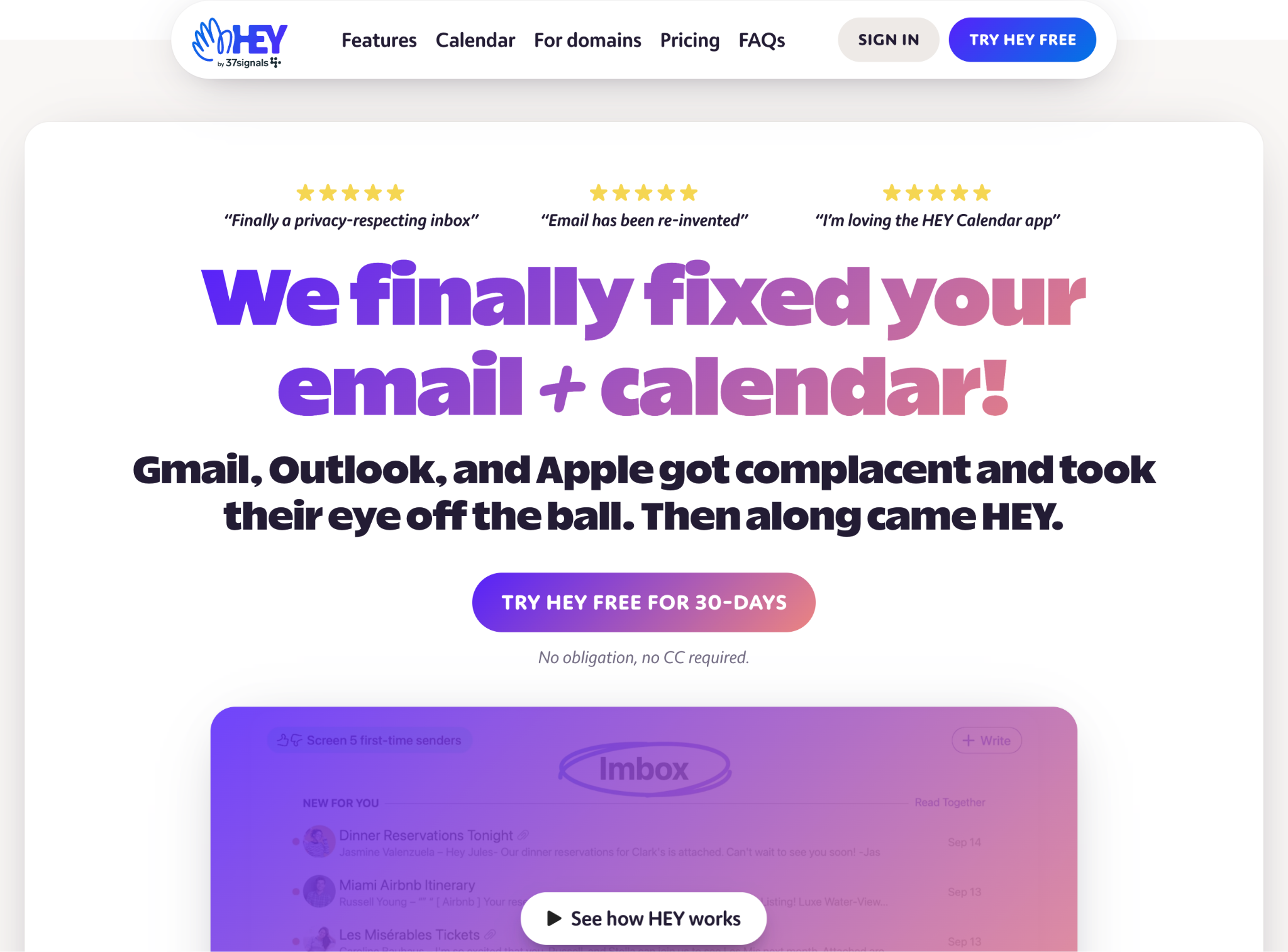
Hey is an email service built by 37signals, the company behind Basecamp and Ruby on Rails, with a strong opinion about what email should and should not be. It’s not trying to process your existing inbox faster, it’s trying to convince you that the inbox itself is the problem. And, in my mind’s eye, they’re right.
The core ideas include: email should not arrive uninvited from people you have never heard of, newsletters should not live next to messages from your team, and tracking pixels that let senders know you opened their email should be blocked by default.
Hey calls its primary inbox the “Imbox” (important and immediate only) and routes everything else to the Feed (newsletters, updates, and email marketing in general) or the Paper Trail (receipts and invoices).
It never added AI. In 2025, when every email client ships something with a sparkle icon, the absence is the point. Hey’s position is that the discipline is the feature.
Key capabilities
- Imbox, Feed, and Paper Trail routing system
- Screener: approve or decline new senders the first time they contact you
- Spy pixel blocking: tracking pixels blocked by default
- Reply Later: dedicated sorting for emails you need to respond to but not now
- HEY World: a lightweight personal blog hosted on hey.com for any subscriber
- Calendar included in the personal plan
Pricing
| Plan | Price |
|---|---|
| HEY for You (personal) | $99/year |
| HEY for Families | $179/year (up to 5 people) |
| HEY for Domains (teams) | $12/user/month (first user $10) |
| Short address, 3 characters | $349/year |
| Short address, 2 characters | $999/year |
30-day free trial available for the personal plan. Team plans are monthly billing only, no annual discount.
What users say
Reviews divide reliably between people who find the philosophy liberating and people who find the constraints infuriating. But, the people who stay tend to stay, and I can relate. All 37signals’ products are a masterclass in engineering and SaaS development philosophy based on meaningful limitations, and that’s not to everyone’s taste, regardless of how reliable the products are.
Shortwave

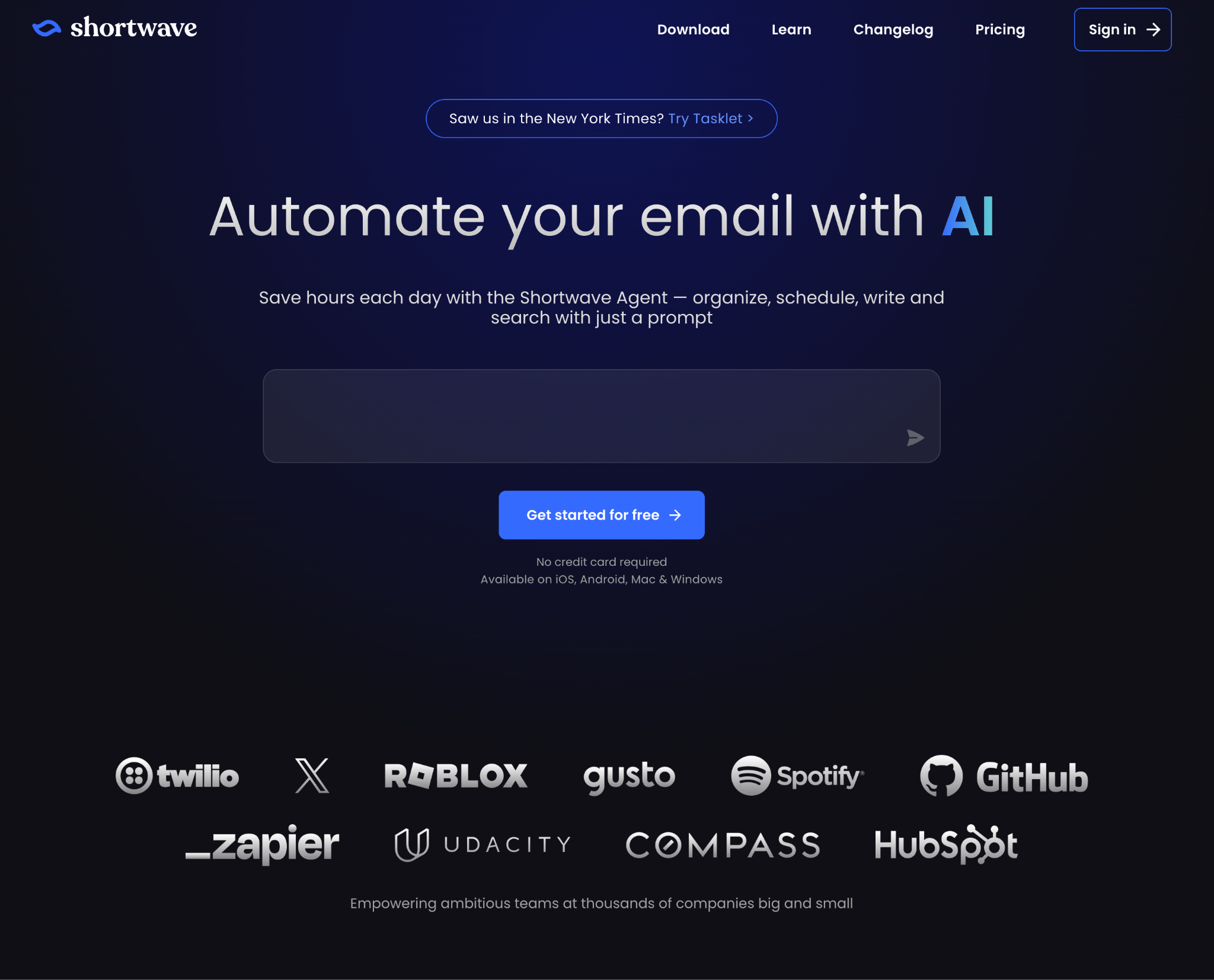
Shortwave is an AI-native email client built on top of Gmail by Andrew Lee, co-founder of Firebase, which Google acquired in 2014. It operates entirely within your existing Google account: no new email address, no migration, no convincing your contacts to change anything.
The pitch is not “faster inbox.” It is “email that connects to your workflow.” Shortwave’s Tasklet feature, launched in October 2025, lets you automate actions that bridge your inbox and external tools: route emails into Notion, trigger Slack messages from specific sender patterns, or create Asana tasks from threads. The automation layer connects to HubSpot, Notion, Slack, and Asana, with both Claude (Anthropic) and GPT powering the AI features.
Key capabilities
- AI summarization for long threads
- Smart inbox grouping by topic and sender
- Tasklet: workflow automation connecting Gmail to Slack, Notion, Asana, HubSpot
- Shared team inbox with assignments and handoffs
- Both Claude and GPT available as AI engines
- 96 features shipped in 2024
Pricing
| Plan | Price |
|---|---|
| Free | Core features |
| Personal | $7/month |
| Business | $9/user/month |
What users say
User reviews highlight AI triage as genuinely useful rather than cosmetic. The Tasklet automation feature appears specifically in recent 2025 reviews as a workflow changer. The main limitation cited consistently: Gmail only. If you use Outlook, iCloud, or any non-Google mail provider, Shortwave is not an option.
This segment moved faster than almost any other in the email startup ecosystem. Email marketing software had its second act from 2020 to 2022 when the newsletter renaissance created entirely new product demand, and the companies that built for that wave early are sitting on real revenue numbers.
Sendlane

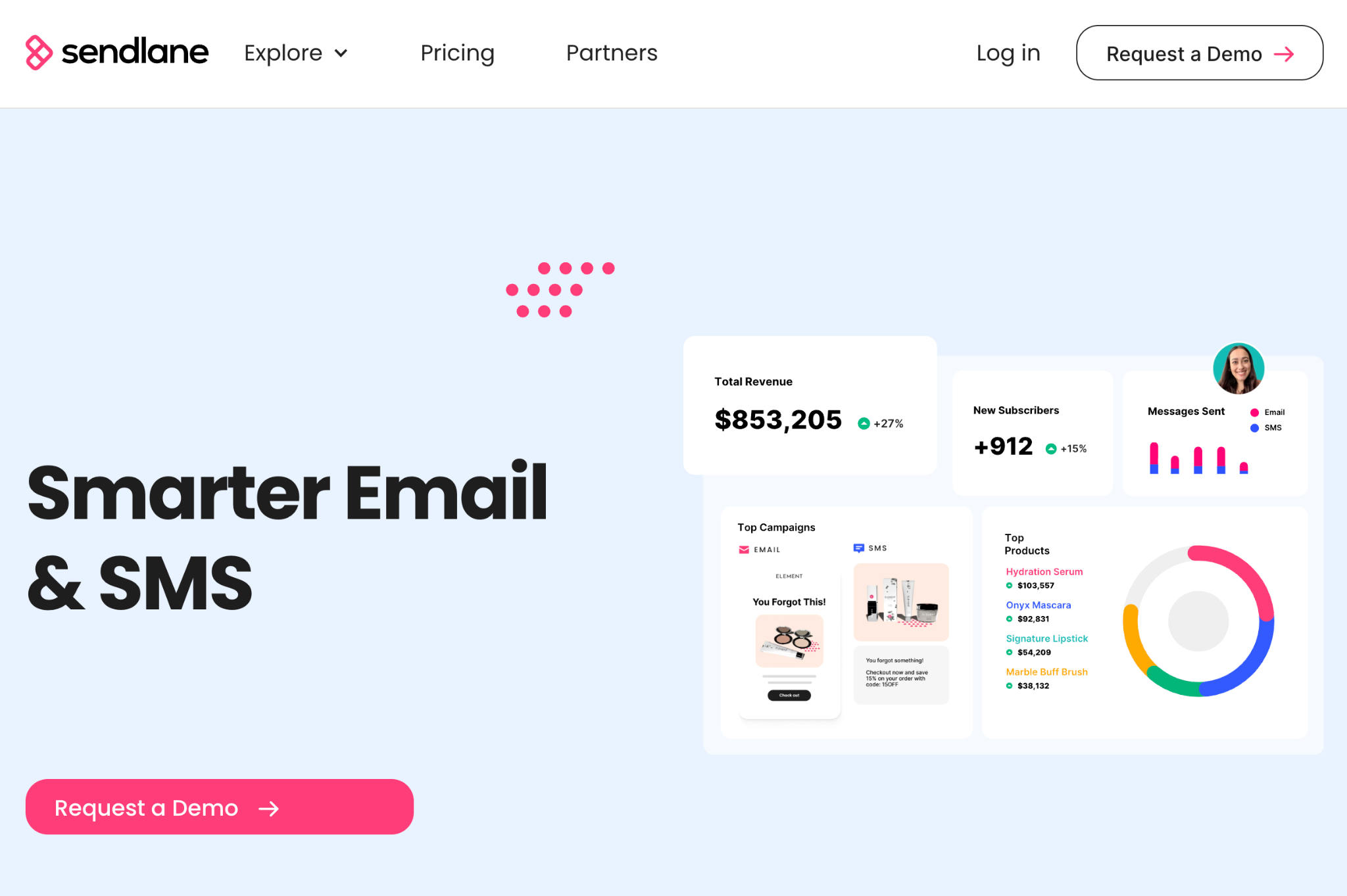
Sendlane is an email and SMS marketing platform built specifically for e-commerce brands. Founded in San Diego in 2013 by Jimmy Kim, it raised a $20M Series A in July 2021 from Five Elms Capital and has been building toward a unified retention marketing stack: email, SMS, product reviews, and lead capture forms, all in one subscription.
And in Jauary 2026, Sendlane was acquired by Privy, but it retained the brand and still operates under sendlane.com.
The differentiating bet is the pricing model. Where Klaviyo charges per contact, which makes list growth increasingly expensive, Sendlane charges based on email send volume with unlimited contacts. For high-volume e-commerce brands with large lists, that math changes meaningfully.
Key capabilities
- Behavior-based automation: abandoned cart, browse abandonment, post-purchase flows
- Deep Shopify and BigCommerce native integration
- SMS marketing (US-only)
- Sendlane Reviews: on-site product review collection, included in subscription (launched July 2023)
- Sendlane Forms: email and SMS list growth tool (launched March 2024)
- Multivariate testing
- 1,400+ service integrations
- White-glove migration and dedicated Customer Success Manager included at all tiers
Pricing
Volume-based with no feature tiers – all customers receive the same feature set. Entry approximately $100/month. No public price card; mid-market and above requires a quote. 60-day free trial includes 100 contacts and 500 sends.
What users say
Users consistently highlight support quality (24/7 coverage with a reported average two-minute response time) and the ease of building automations relative to Klaviyo. The review count is low compared to category leaders, which affects discovery. SMS being US-only is the most consistently flagged limitation.
Beehiiv

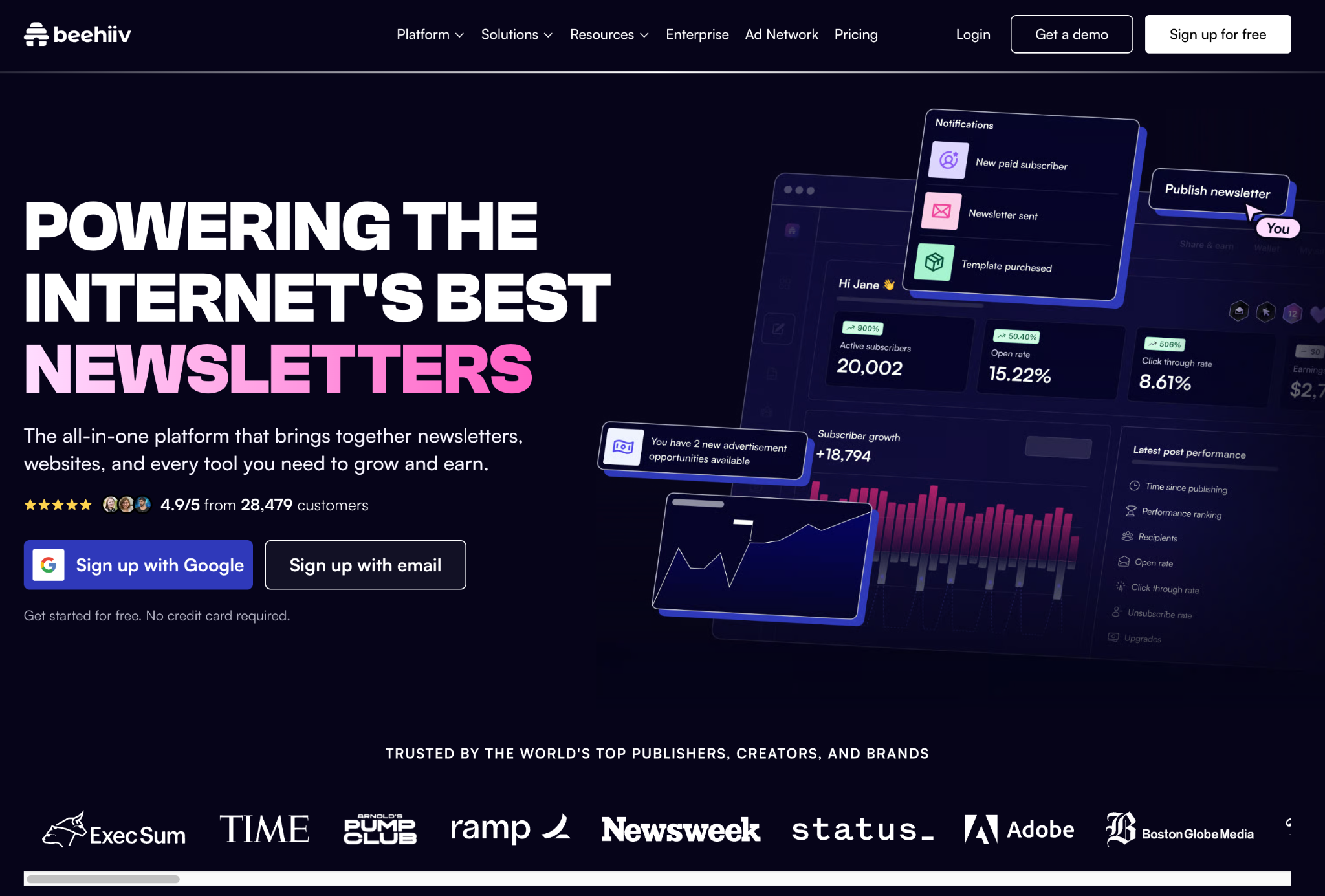
Beehiiv is a newsletter platform built for creators who want to own their audience and build a business from it. Founded in 2021 by former Morning Brew employees, it launched during the newsletter wave and bet on a specific insight: the best newsletters would eventually outgrow a pure publishing tool. They would need monetization infrastructure, growth mechanics, and analytics that actually told them something useful.
That bet is proving correct. As of June 2025, Beehiiv has $30M in annualized revenue, split between software subscriptions (~$20M) and its ad network called Boosts (~$10M). It has raised $50M total, with a $33M Series B led by NEA and Lightspeed in April 2024. Valuation: approximately $192M.
Key capabilities
- Newsletter publishing with a clean writing and editing interface
- Boosts: paid referral program where newsletters pay to be recommended inside other newsletters
- Paid subscriptions: direct reader monetization built into the platform
- Ad network: sell ad inventory in your newsletter through Beehiiv’s marketplace
- SEO-optimized web presence generated automatically for every newsletter
- Detailed subscriber analytics: growth, engagement, revenue per subscriber
- AI writing tools built natively into the editor
- AI website builder (launched November 2025)
Pricing
| Plan | Price |
|---|---|
| Launch (free) | Up to 2,500 subscribers |
| Scale | $43/month (annual) / $49/month |
| Max | $96/month (annual) / $109/month |
| Enterprise | Custom |
What users say
Users praise the monetization layer, specifically Boosts, as a real differentiator from Substack and Kit. Creators who have run newsletters on multiple platforms tend to cite Beehiiv’s analytics as the most actionable of the group.
The most common complaint: the free plan caps feel tight for newsletters growing toward the paid tier threshold, creating a gap that pushes early-stage creators into a decision before they have the revenue to justify it.
Loops

Loops is not a newsletter tool or a broadcast email platform. It is a lifecycle email system built specifically for SaaS companies, designed around the premise that product events (user signs up, completes onboarding, upgrades to a paid plan, etc.) should automatically trigger the right email at the right time, without a marketer manually building a campaign around each scenario.
Loops is what you use when your email is driven by what users do inside your product, not by what your marketing team schedules for a given Tuesday.
Founded in 2022 and backed by $3.2M from Craft Ventures, Altman Capital, SV Angel, Liquid2, and Box Group, Loops integrates with Segment, Stripe, and the data sources that SaaS teams already rely on. Pricing at every tier includes unlimited sends and no per-seat fees.
Key capabilities
- Event-triggered email automation (product events as sending triggers)
- Transactional and lifecycle email in the same platform
- Segment, Stripe, and SaaS data source integrations
- Audience filtering and segmentation by user properties
- Unlimited sends at all paid tiers
- No per-seat pricing
Pricing
| Plan | Contacts | Sends/month | Price |
|---|---|---|---|
| Free | Up to 1,000 | 4,000 | $0 |
| Paid | From 1,000+ | Unlimited | From $49/month |
What users say
Loops’ core audience are SaaS developers and founders. And community signals on Product Hunt, Hacker News, and founder communities are consistently positive. The unlimited sends model and the Stripe and Segment integrations are cited most often as the reasons teams choose it over Customer.io or Intercom’s email layer.
EmailSendX

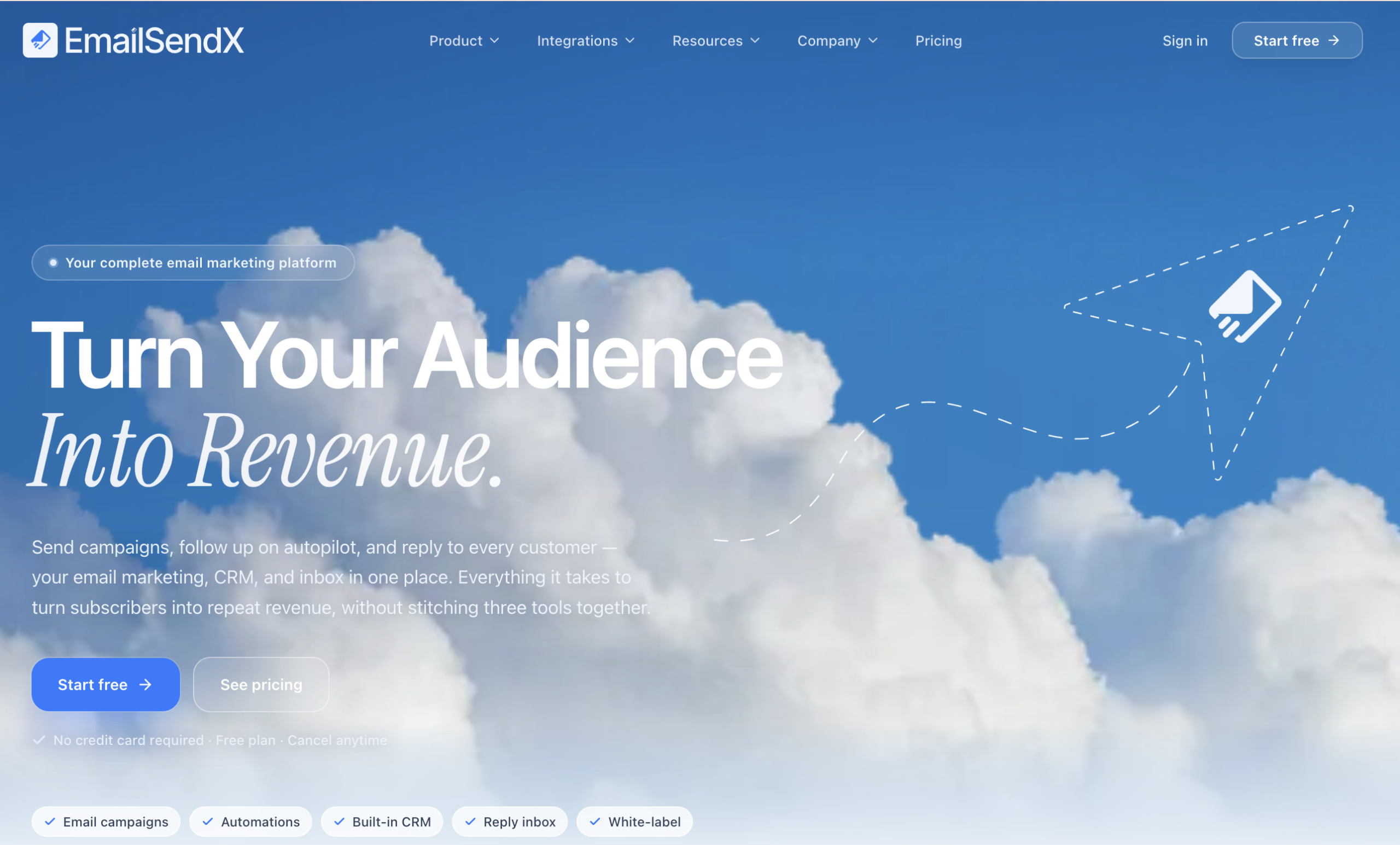
EmailSendX is an email marketing platform built around a slightly different idea: the software that manages your campaigns does not necessarily need to own the infrastructure that sends them.
The platform went public in January 2026 and is built for agencies, multi-brand operators, and teams that want campaigns, automation, audience management, a CRM, and replies under one roof. Instead of routing email through infrastructure bundled into the subscription, EmailSendX lets customers connect their own sending provider — 11 options, including Amazon SES, SMTP, SendGrid, and Mailgun — so the sending cost carries no markup and the sender reputation stays attached to infrastructure they control.
That split matters most for agencies. Each client can run inside an isolated workspace with its own contacts, campaigns, sending provider, domains, and branding, instead of the agency maintaining a collection of unrelated accounts.
Key capabilities
- Multi-workspace architecture for agencies and multi-brand teams
- Bring-your-own sending infrastructure across 11 providers, including Amazon SES and generic SMTP
- Drag-and-drop email builder with reusable templates and responsive previews
- Visual marketing automation with branching, delays, conditions, and segment-based triggers
- Campaign scheduling, A/B testing, segmentation, forms, and real-time analytics
- Deliverability toolkit: email verification, SPF/DKIM/DMARC setup, warm-up, suppression, and blacklist monitoring
- White-label tracking domains, unsubscribe pages, hosted forms, and client-facing branding
- Shared reply inbox with automated follow-up sequences that stop when a contact replies
- REST API and webhooks
- Optional CRM with accounts, deals, pipelines, and automation triggers
Pricing
Free forever on Hobby. Paid plans start at $14/month and scale by contacts and workspace count; customers pay their connected email provider separately at that provider’s published sending rate.
| Plan | Price | Contacts | Workspaces |
|---|---|---|---|
| Hobby | $0 | 500 | 1 |
| Starter | $14/month | 5,000 | 3 |
| Pro | $29/month | 15,000 | 10 |
| Business | $99/month | 45,000 | 25 |
| Custom | Custom | Custom | Custom |
What users say
EmailSendX is one of the youngest products in this guide, so its independent public review history is still developing — which makes the business model more interesting to evaluate than star ratings at this stage.
The trade-off is the same thing that creates the advantage: teams that want a fully hands-off sending provider bundled into one traditional subscription may prefer a more conventional platform. For agencies managing multiple brands, or technically comfortable teams that care about infrastructure ownership and predictable software costs, the separation is the point.
CampaignLark

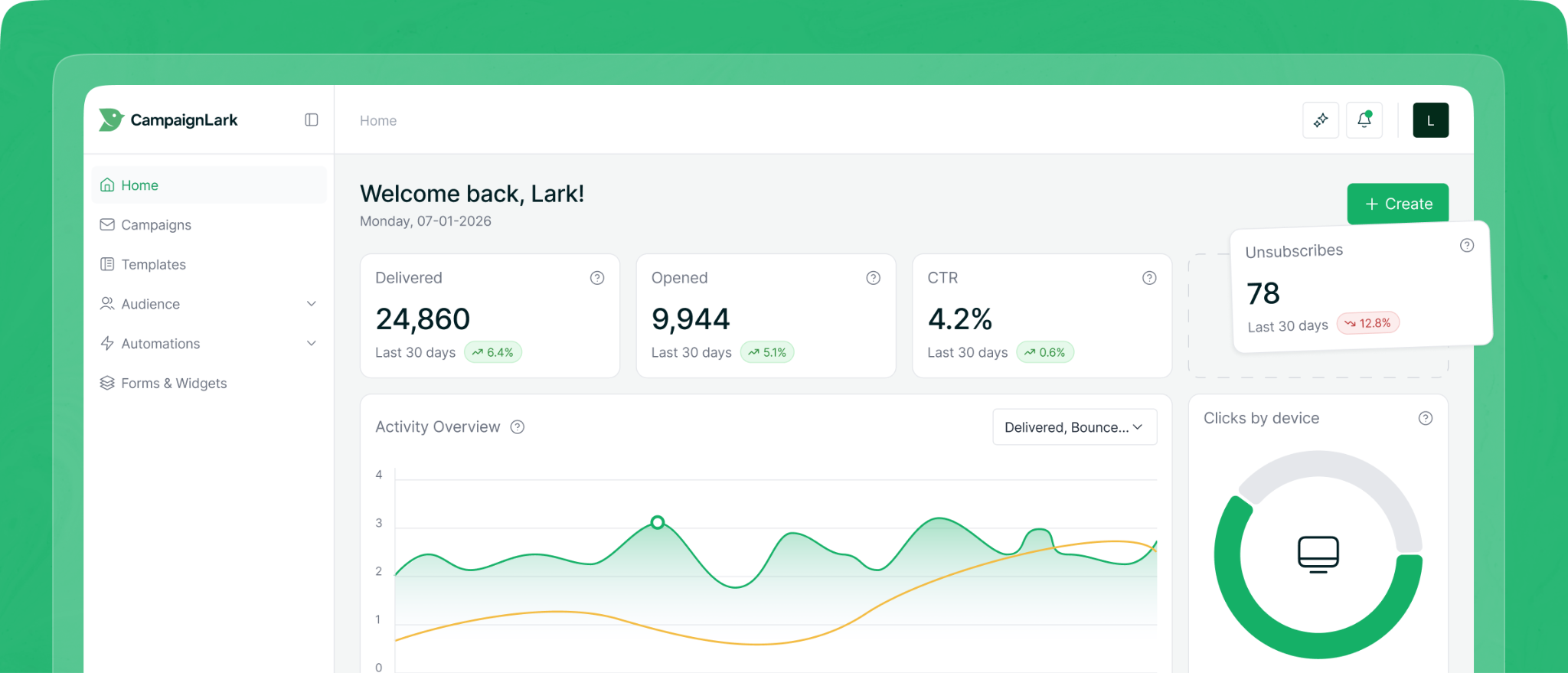
CampaignLark is an email marketing and automation platform launched in 2024. It spun out from the Maileroo ecosystem as its own standalone product.
The pivot followed extensive customer feedback sessions (surveys, interviews, and one-on-one conversations) that revealed a consistent pattern: users wanted campaign management, automation, and analytics in the same place as their sending infrastructure, not stitched across two products. The team reimagined the product from scratch and relaunched CampaignLark as a dedicated email marketing solution.
The platform’s structural differentiator is pricing logic. Where Mailchimp, Klaviyo, and ActiveCampaign charge based on how many contacts you have stored, CampaignLark charges based on how many emails you send. For teams with large lists and variable send frequency, for instances, agencies managing dormant segments alongside active ones, or brands with seasonal campaigns, that distinction changes the math meaningfully as the list grows.
Key capabilities
- Drag-and-drop email editor with template gallery and HTML import
- Behavioral trigger automation with visual workflow builder
- Audience segmentation by behavior, interests, and custom data fields
- Dynamic content personalization per segment
- Form builder: pop-ups and embedded forms for list growth
- Real-time analytics: opens, clicks, bounces, conversions
- A/B testing across campaigns
- REST API and webhooks for programmatic access
- Multi-workspace support for agencies managing multiple clients
- Free sending domain included
Pricing
| Plan | Price | Emails/month | Contacts |
|---|---|---|---|
| Free | $0 | 1,000 | 5,000 |
| Starter | $15/month | 5,000 | Unlimited (fair use) |
| Custom | Custom | 3M+ | Unlimited |
All plans include bulk campaigns, A/B testing, link tracking, unsubscribe management, API access, and automation analytics.
What users say
CampaignLark launched in 2024 and is still accumulating its public review record, which reflects its age more than its reception. Early signals from community channels describe reliable deliverability (the platform reports 100M+ monthly emails delivered and an 85%+ inbox placement rate) and setup under five minutes. The usage-based pricing model is the primary draw for teams migrating from contact-tier platforms; how the platform sustains that positioning as it matures is the open question new customers are placing a bet on.
Growth marketing and transactional
This section covers two different scales of the same problem:
- Email automation software for enterprise marketing teams that need to coordinate campaigns across every channel at once.
- Production tooling for organizations managing large template libraries across multiple teams.
Iterable

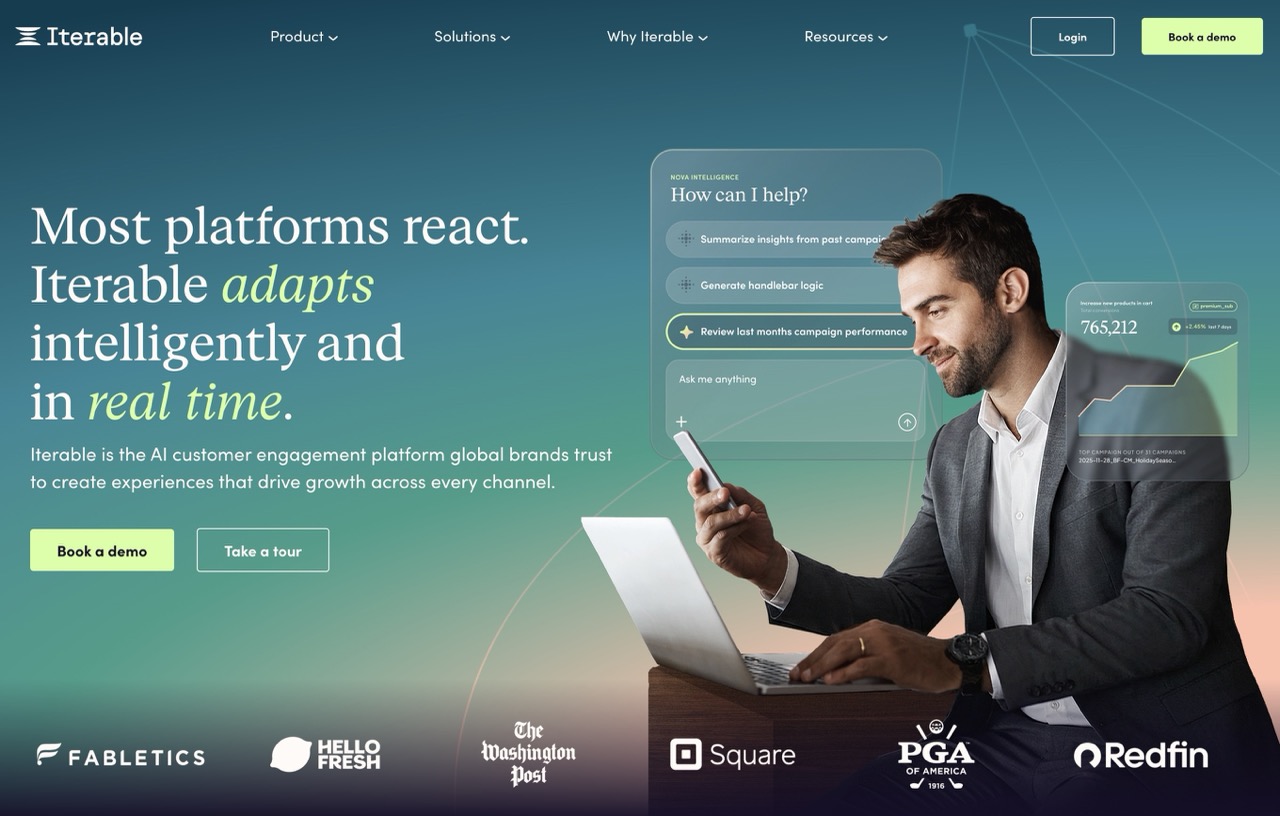
Iterable is a cross-channel growth marketing platform for large organizations. Founded in 2013 by Justin Zhu (formerly Twitter) and Andrew Boni (formerly Google), it targets enterprise marketing teams who need to coordinate messaging across email, push notifications, SMS marketing, and in-app content through a single workflow system. Brand clients have included Adidas, Netflix, and Google.
With $343M raised from Silver Lake and Viking Global, $240M in annualized revenue, and a $2B valuation, Iterable is one of the few email startups in this guide that has genuinely scaled as an independent. In July 2025, co-founder Andrew Boni stepped down as CEO, moving into a Chief Scientist role focused on AI, and Sam Allen, a former Salesforce executive, took over. The company remains independent.
Tip: Iterable holds Activate Summit annually and it’s one of the coolest marketing tink tanks in the industry.
Key capabilities
- Cross-channel orchestration: email, push, SMS, in-app, web, direct mail
- Workflow builder for complex multi-step campaign logic
- Iterable Nova: AI agent for marketing orchestration (2024-2025 flagship product)
- Audience segmentation and behavioral triggers
- Event-based personalization at scale
- Annual Activate conference for customers and ecosystem partners
Pricing
Enterprise-only. No self-serve tier. Pricing is quote-based and modular: base subscription plus email volume charges, plus profile and event charges, plus SMS and push add-ons. Reported starting point is approximately $20,000/year for 50,000 monthly active users.
What users say
Reviews are strong on workflow sophistication and support quality. The most common criticism: pricing complexity. The quote-only model and per-channel add-on structure make cost forecasting difficult as usage scales.
Dyspatch

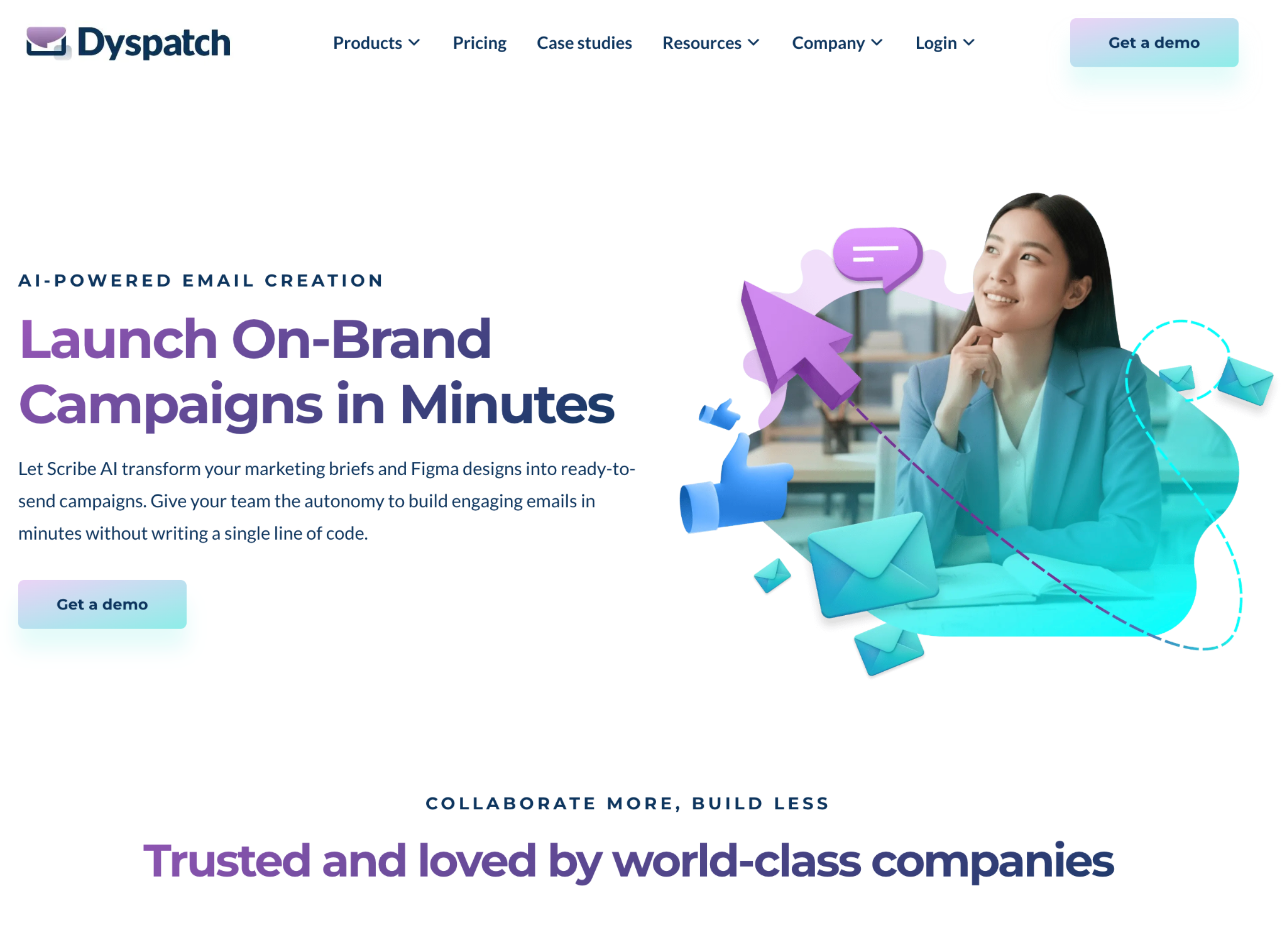
Dyspatch is an enterprise email production platform for large organizations managing email at scale. It started as Sendwithus in 2013, a template management tool for developers working on transactional email, and rebranded to Dyspatch in 2019 as it shifted focus toward enterprise workflows.
The problem it addresses: at large organizations, every email typically involves at least four different people (designer, developer, copywriter, compliance) and no purpose-built tooling that handles all of them without bottlenecks. Dyspatch provides the approval workflow, the localization infrastructure (300+ languages via Smartling integration), and the modular template system so those handoffs do not become a queue of tickets. Customers include Microsoft, Autodesk, and Zillow.
Key capabilities
- No-code drag-and-drop builder with modular email design system
- Multi-locale translation management: 300+ languages, native Smartling integration
- Approval workflows for multi-team review and sign-off
- AMP for Email support for interactive email elements
- Built-in Litmus email rendering tests across clients and devices
- API and code export for developer-driven workflows
Pricing
| Plan | Price |
|---|---|
| Starter | $149/month |
| Teams | $499/month |
| Teams+ | Custom |
Teams+ adds Smartling translation, SAML SSO, SLA support, workspaces, and a dedicated account manager.
Status note
Sendwithus, the original small-business product, still exists at app.sendwithus.com but is no longer actively developed or marketed. Existing integrations continue to work. The company’s focus is entirely on the enterprise Dyspatch product.
AI email writing and sales outreach
Jacquard (formerly Phrasee) [REBRANDED]

Phrasee was one of the earliest startups to apply AI to email marketing copy. Founded in February 2015 by Parry Malm, Neil Yager, and Victoria Peppiatt, it used natural language generation and testing to optimize subject lines and email body copy at scale; primarily for large retail and financial services brands. Enterprise clients included eBay, Walgreens, and Virgin Holidays.
It no longer goes by Phrasee. The company rebranded to Jacquard and was acquired by Capital D. The product still exists and still serves enterprise clients, but it has moved entirely into enterprise territory with pricing that starts around $24,000 per year.
At that scale, the combination of AI-driven brand language optimization and automated multivariate testing has delivered measurable engagement improvements for major retailers; which is what made the company worth acquiring in the first place. If you are evaluating it as a smaller team or startup, this is a window into what enterprise-tier AI email copywriting looks like, not a tool you will be using.
Lavender

Lavender is an AI email coach for sales reps. Unlike AI email writers, it does not generate emails for you. It scores the email you are writing in real time as you type it, flags what is likely to reduce reply rates (too long, too many sentences, mobile-unfriendly structure, spam trigger words), and suggests specific improvements. The email still comes from you.
The logic behind the approach is that a sales rep who learns to write better emails outperforms one who relies on AI-generated output indefinitely, and produces emails that sound like the same person sent them every time.
Founded in 2020, Lavender raised $13.2M in February 2023.
Key capabilities
- Real-time email quality scoring (0-100 as you draft)
- Personalization suggestions from prospect LinkedIn activity, news, and company data
- Spam word detection
- Subject line analysis
- Mobile preview (most cold email is opened on mobile)
- Chrome extension for Gmail and Outlook
- Team analytics: visibility into which emails are getting replies and why
Pricing
| Plan | Price |
|---|---|
| Starter | $29/month |
| Pro | $49/month |
| Teams | $69/user/month |
| Enterprise | Custom |
Approximately 20% discount on annual billing.
What users say
The coaching model earns specific praise – users mention improving their own reply rates over time, not just for individual sends. The main issue reported across reviews is Chrome extension stability: crashes and slow loading appear in a meaningful percentage of reviews, which matters for a tool people keep open in their email client throughout the day.
Instantly.ai

Instantly.ai is a cold email platform built around a specific, well-understood use case: sending personalized outbound email at high volume across many domains and sending accounts without triggering spam filters or paying a per-account fee that makes the math unworkable.
It is bootstrapped, has approximately 15 employees, and as of 2024 was doing $20M in annualized revenue. That ratio of revenue to headcount is not common in any software category.
The product is built around one structural insight that separates it from generic email marketing tools: serious cold email outreach requires many sending accounts (to distribute volume and protect deliverability), and most platforms charge per account or per seat. Instantly.ai includes unlimited email accounts and built-in email warmup at every pricing tier, including the base plan.
Key capabilities
- Unlimited sending email accounts at every tier
- Built-in email warmup across all accounts automatically
- AI-assisted personalization: variable fields and opening line generation at scale
- Multi-step sequence builder for outreach campaigns
- Deliverability analytics by account, domain, and campaign
- Reply detection and thread management
- A/Z testing (up to 26 variations, not just A/B)
Pricing
| Plan | Contacts | Emails/month | Annual price/month |
|---|---|---|---|
| Growth | 2,000 | 10,000 | $30 |
| Hypergrowth | 10,000 | 100,000 | $77.60 |
| Light Speed | Custom | Custom | $358 |
All tiers include unlimited email accounts and unlimited warmup.
What users say
Users cite the unlimited account model and the warmup feature as the primary reasons for choosing it. The most common theme in positive reviews: return on investment relative to cost, particularly for SDR teams and founder-led outbound at early-stage companies.
Email security and deliverability
The email security startup category has consolidated significantly. The two most notable independent companies in this space have both been acquired – Tessian by Proofpoint and Kickbox by what became Ziff Davis. Both products continue to operate, though one still carries its own brand and the other no longer does.
Tessian [ACQUIRED – BRAND RETIRED]

Tessian was a London-based email security company co-founded by Tim Sadler, Ed Bishop, and Tom Adams – all Imperial College London engineering alumni. Its defining idea was “human layer security”: the observation that most enterprise email breaches are not clever technical exploits but human mistakes; eg. sending sensitive data to the wrong address, misattaching a file, falling for a phishing attempt that looked like a colleague.
Tessian built machine learning systems that modeled normal email behavior per user and flagged deviations in real time. Send a message to someone who shares a name with a contact but who you have never actually emailed before? The system would catch it before it left your outbox.
The company raised approximately $120M from Accel, Balderton, and Sequoia, and was acquired by Proofpoint on December 19, 2023. Tessian no longer exists as a standalone brand. The technology has been integrated into Proofpoint Adaptive Email DLP and Proofpoint Core Email Protection API. If you want what Tessian built, you now get it as part of Proofpoint’s human-centric security portfolio.
Kickbox [ACQUIRED]

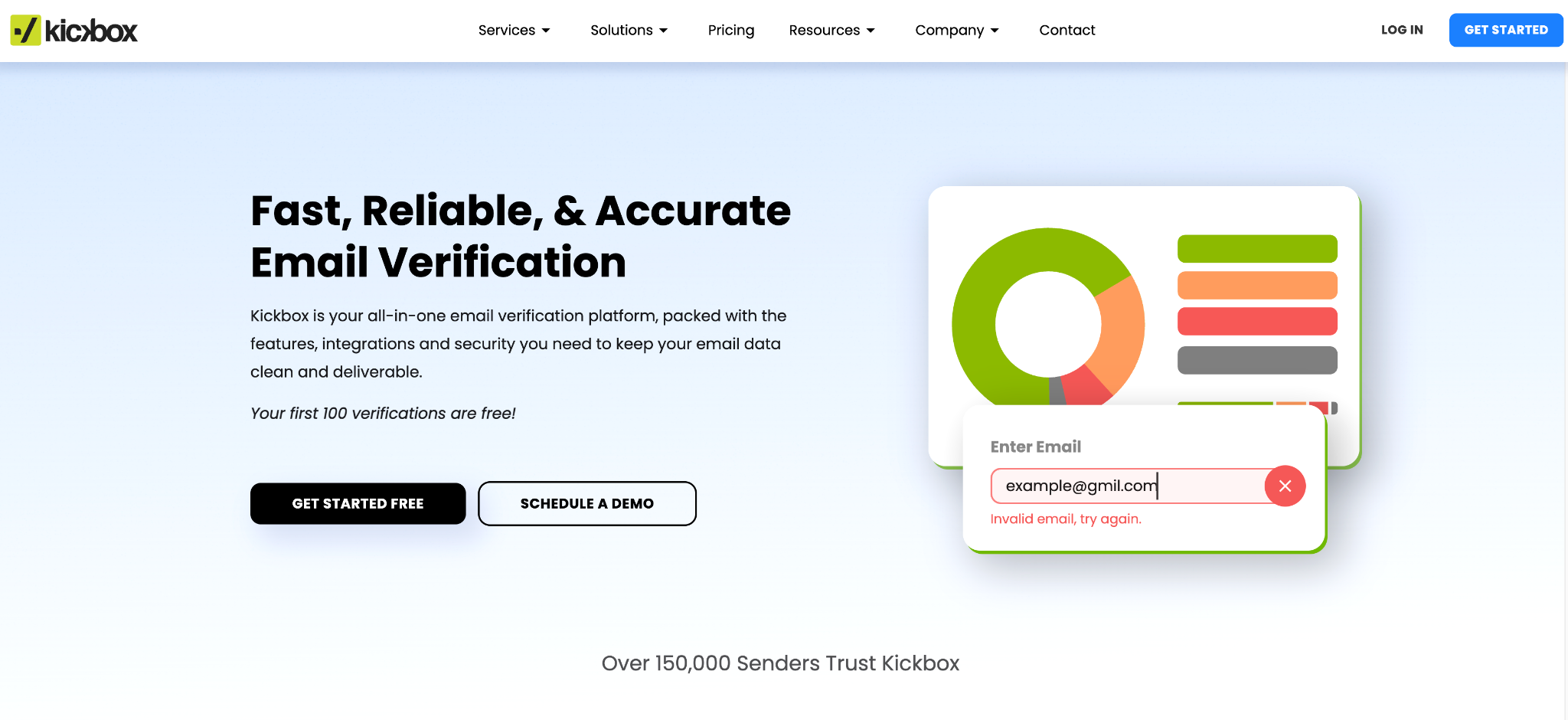
Kickbox is an email verification tool. Submit a list of email addresses before a campaign and it tells you which are valid, which are risky, and which will bounce. A straightforward solution to a problem that meaningfully affects email deliverability and sender reputation if left unaddressed; cleaning a bad list is considerably cheaper than repairing a damaged sending domain.
Kickbox was founded by Dan Stevens and acquired by J2 Global in Q3 2020. J2 Global renamed itself Ziff Davis in 2021 and assembled a portfolio of email infrastructure tools that includes SMTP.com, Campaigner, and iContact. Kickbox operates as a distinct brand within that portfolio, still at kickbox.com.
Key capabilities
- Single and bulk email address verification
- Real-time API verification for form submissions and signups
- Sendex deliverability score per address
- Detection of role addresses, disposable domains, spam traps, and syntax errors
- Integrations with major email marketing platforms
Pricing
Pay-as-you-go, credit-based. Credits expire after 12 months.
| Volume | Price |
|---|---|
| 500 verifications | $5 |
| 100,000 verifications | $800 |
| 1,000,000 verifications | $4,000 |
What users say
Users consistently highlight verification accuracy and API reliability. The 12-month credit expiration is the most frequently mentioned friction point for teams that run infrequent verification cycles.
What the email startup landscape tells us
Email was supposed to die – it didn’t. What it has done is generate an entire ecosystem of email startups trying to fix it, extend it, or sell to it; and then get acquired by the companies that already owned the infrastructure underneath. Therefore, the best email startups still standing in 2026 can be divided into two groups:
- The ones that exited: Superhuman (to Grammarly), Tessian (to Proofpoint), Kickbox (to Ziff Davis), Phrasee (to Capital D as Jacquard). They proved the category was valuable.
- The ones that did not: Beehiiv at $30M ARR, Instantly.ai at $20M ARR on zero outside funding, Iterable at $240M ARR and a $2B valuation.
The pattern among the companies still standing is not accidental. They found a narrower problem and solved it completely. Newsletter monetization. Cold email infrastructure for sales teams. Lifecycle email for SaaS products. AI coaching for sales writing. They did not try to rebuild the inbox. They built precisely what was missing around it.
If you are a developer building email into your own product, transactional email notifications, lifecycle messaging, email deliverability checks before campaigns go out, that infrastructure layer is a separate conversation from the tools above.
Mailtrap provides a developer-first email infrastructure featuring Email API/SMTP service and Email Marketing for high-deliverability sending. Built for modern dev experience, automated workflows, and AI agents, it includes Inbound Email routing and an Email Sandbox for secure staging.
The email startups listed in this guide solve for client experience, marketing, and security. The infrastructure underneath all of it is a different kind of tool; and one that tends to outlast every wave of startups building on top of it.